Showing posts with label teens. Show all posts

Wednesday, October 5, 2022

30 Things You Learn in 18 Years of Parenting

I've done it. I've sent my first child to college.

That means I've successfully kept alive, fed, and clothed a whole other human for 18 years. This is huge for me, as I can't even handle houseplants.

And just like I've done a few posts musing on the things I've learned after 10 years and 15 years of parenting, this seems like a good milestone year to write another chapter.

If Phillip and I look tired in this picture, it's because we are.

1. Never judge anyone's parenting whose kids are older than yours. You have no idea.

2. People will say you'll have more free time once your kids reach [insert stage of life here]. They're lying.

3. Big kids are every bit as messy as little ones. Actually, they're worse, because you can't even begin nagging them to clean up until after their 3,000 extra-curricular activities.

4. Kids will forget almost all the things you did with them when they were younger, but they'll remember your family traditions with a Norman Rockwell-like nostalgia.

5. Wait as long as you possibly can before giving your kids smartphones.

6. If you don't specifically ask them to take care of the the toilet paper tube on the bathroom counter, they'll just adapt and it becomes a permanent fixture of the house.

This is our overflowing cardboard recycling bin. And it's overflowing because a child flattened a cardboard box, laid it on top of the empty bin, and piled everything else on top of it for a week.

7. It's really humbling when your kids get old enough to realize you're not perfect.

8. Occasionally asking your children to make sacrifices or go without something they want is nothing to feel guilty about. In fact, it's critical to their well-being.

9. Sharing your favorite shows and movies with your kids when they're old enough is magical. 

10. Even the best teenagers are super-frustrating sometimes.

11. The car is a great place to initiate serious talks with your older kids: you don't have to make eye contact, and they can't escape.

12. Eventually, kids will choose their own interests and preferences. They're usually not what you would've chosen for them, and this is surprisingly hard.

One of our children decided her passion was horseback riding; we later discovered she was allergic to horses.

13. When teenagers inconvenience you by throwing things together at the last minute, it isn't because they're inconsiderate. They genuinely don't realize that everyone else in the whole world (except other teenagers) plans ahead.

14. Frankly, it doesn't matter very much what your style of parenting is, as long as it communicates to your kids that you love them.

15. Making a perfectly reasonable request in your calmest and most pleasant demeanor can still be interpreted by your child as "yelling at them."

16a. The saying "little kids, little problems; big kids, big problems" is absolutely true. 

16b. When you're the parent dealing with your big kid's big problems, you desperately need support that you're unable to get because it would breech your teen's privacy. Sorry. 

17. Appreciate the years when your kid goes to bed early and you're off-duty at 8 PM every night.

18. Be home for your big kids as much as possible. Even when they don't depend on you for their minute-to-minute physical survival anymore, they thrive on the stability of your presence. 

19. Kids love few things more than they love leaving every light in the house on.

20. When giving your older child guidance, never end a sentence with a period. Just ask questions until they arrive at the conclusion you hoped they'd reach, and hopefully they'll take their own advice.

21. Teach your kids life skills. For one thing, they actually start being helpful when they're older, and for another, they'll be ready to leave home one day without being overwhelmed by adulting.

Eight years later, this is finally paying off.

22. You will, because of your older kids' large statures and self-assured attitudes, forget that they're still just kids. But don't worry, they'll do something to remind you soon enough.

23. People aren't exaggerating when they say teenage boys smell and will eat everything in sight. If anything, they're understating it.

24. Moodiness is normal, but if you honestly think your teen dislikes you or is chronically disrespectful to your face, your relationship needs help. (Here's a fantastic book about that.)

25. It's really irritating to be the driver for someone who has earbuds shoved in their ears.

26. Older kids refuse to sleep with a flat sheet. No one knows why.

Younger ones will choose to sleep on the floor in between the wall and the perfectly serviceable bed you bought them.

27. Potty training a toddler is a carefree frolic through the meadow compared to teaching a teenager to drive.

28. Everyone starts out thinking they'll be a chill parent, but sooner or later, they'll be threatening to burn down the house if they find one more empty box in the pantry like the rest of us.

29. It doesn't matter what's in the fridge, your kids will look in it and declare that there's "no food." And then they'll leave the door open.

30. Parenting is easier if you don't take yourself too seriously.

The thing that becomes clearest as you raise a child to young adulthood is that actually, you know nothing. Just do the best you can and never stop trying. With any luck, one day you'll have grandchildren to enjoy while your kids go gray trying to figure this stuff out for themselves.

Click to Share:
Unremarkable Files
Read More »

Wednesday, February 23, 2022

What We Learned from Our Family Dopamine Detox Experience

I've been hearing a lot about dopamine lately. And the more I heard, the more I became convinced it was time for a family dopamine fast.

In a nutshell, dopamine is the feel-good chemical released in your brain whenever you do something enjoyable. It also plays a role in motivation, making it harder to enjoy or even start low-dopamine activities if you're indulging too much in high-dopamine ones.

While you wouldn't want to eliminate all dopamine (when scientists block the dopamine in mice's brains, the mice starve because they lack the motivation to eat), I decided it was time for a little experiment of our own: what would happen if we cut out things that added a lot of dopamine but little overall value to our lives?

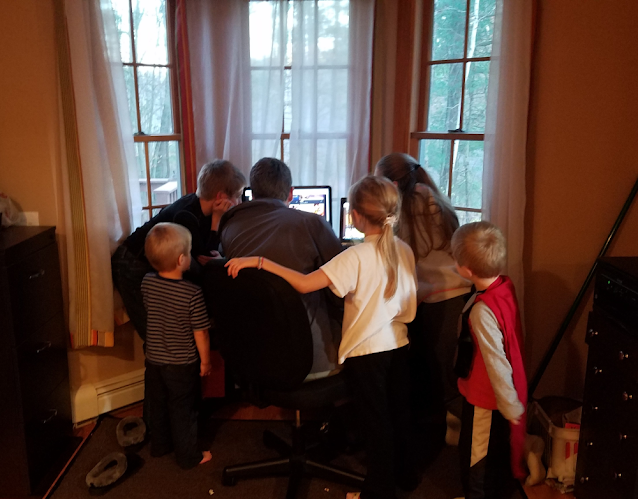
Sadly, this was not a staged photo.

For one week, my family of 8  two adults plus six kids ages 5 to 17 — were going to try doing just that. For our purposes, we identified the following high-dopamine, low-value activities:
  1. Using computers or phones for any non-work or -school activities
  2. Playing video games
  3. Listening to music
  4. Eating sugar and processed food

After the week was up, I gave separate interviews to each member of the family, including myself, to see how it went.

Q: What did you like about the dopamine fast?


Me: Everything. The kids were less crabby. I wasn't constantly policing screen time or reeling the kids back in from watching someone else play Minecraft. When I couldn't pull out my phone during moments of downtime, I was more accessible to the kids. And I loved not having the teens wearing their headphones around the house closed off to the family or scrolling on their phones when I drove them somewhere like I'm the hired help.

Phillip: I was calmer and less stressed. I had more motivation to do things so I wasn't sitting around stressed about not doing things — I just did them. I found enjoyment in activities like reading and thinking. I interacted with the kids more.

17:  I used to listen to music or watch a video when I was bored; when I was forced to do something like reading a book, it took more energy in the short term but actually gave me energy and was more satisfying in the end. It forced me to slow down and think about what would actually make me feel better, so I felt less bad about how I was spending my time. I don't want to use my brain because I'm tired, but I feel better when I use my brain more. 

15: Everything felt more grounded and physical this week.  There were less days where I felt blah. I didn't do more things, but I felt less rushed when I did do things. I knew where all my time was going so that was nice.

13: Nobody was screaming and yelling about screens. We did more stuff together like board games, instead of me being off doing my own thing. I didn't really miss screens, even though my brain was like "I want to go back to screens!"

10: I liked how everybody wasn't grouchy because of screens. When I had screens I wanted to use my time as much as I could with no one bothering me so I would get grumpy and tired and it hurt my eyes, but I still wanted to play it. I also liked the no-screens part because my friend messages me too much, and I got to do more with family.

7: I don't know.

5: I didn't really get distracted [by watching other people playing games when I'm supposed to be doing something else.]

Q: What did you dislike?


Me: Nothing, really.

Phillip: I missed access to information. Sometimes I was curious about something but decided not to look it up. Like right now, I was wondering why trees don't freeze in the winter. Last week I wouldn't have looked it up, but this week I did and it's fascinating, actually.

17: I don't like doing homework with no music. There was also no easy distraction when I wanted to distract myself from negative thoughts I was having. I don't think cutting out sugar made any difference.

15: Sometimes it was inconvenient when I wanted to text something or check the [online] calendar and couldn't. I got bored a lot, like when I finished a test early at school and then just sat there for 50 minutes doing literally nothing. 

13: There were a few times when I was at activities where they had hot chocolate and it was annoying to turn it down.

10: I still want to have some sugar! And since I couldn't message my friend, if I had something to tell her I had to try to remember it until the next day and I didn't like going home and never talking to her again.

7: I kind of didn't have anything to do except read and play outside. I just didn't know what to do, it was kinda boring.

5: I can't have all the foods.

The kids may not have liked the "no sugar" rule, but no one can say they weren't committed. In the cabinet, I found our shaker of cinnamon sugar with a new label reading "POISON."

Q: What surprised you?


Me: I read a whole book this week, which would normally take me 6 months. I used to go on YouTube when I was tired, but I think it only made me more tired. I think it stresses my brain to keep switching between the real world and the virtual world. I was also surprised that I liked not using the car radio all week. Less constant sensory input like background music in the car made me feel more relaxed and slowed down.

Phillip: Nothing. It was basically what I expected.

17: I was expecting to miss certain online activities but I found other things to do with my time. I was also expecting to feel like I did a lot, but I think I ended up just doing things slower.

15: I expected to be more tired but I was actually less tired. I could just go home from work and do stuff, I didn't really need a break [to scroll my phone]. Also, I ended up getting offered a lot of sugar that week [namely a juice/chocolate muffin/donut breakfast, cupcakes, hot chocolate and candy, and two donuts with brownie batter filling] and before I probably would've eaten it all but felt bad about it. 

13: I expected to miss screens but I didn't, really. Which is weird because we've done screen-free weeks before and it was painful. [Mom's note: maybe because we focused on why instead of just me making a rule that seemed arbitrary to the kids.]

10: I thought it wouldn't be very good but it was okay. Kind of boring, though.

7: Nothing surprised me, I didn't even think about it.

5: I thought it would be worse than this but it's not.

Q: What do you want to do differently now that this is over?


Me: I want to confine all my Internet use to daytime hours and be totally present once the kids come home from school. I also want to drastically cut back screen time for all the kids. It has no benefit to them, especially the 5- and 7-year-old who just get crabby when it's time to stop playing. 

Phillip: The main thing I don't want to do is browsing so much. I want to go on the Internet with a specific question or purpose and then get off of it. So less idle browsing and refrain from using screens late in the evening.

17: I want to be more aware of why I'm looking for dopamine. I want to slow down and actually evaluate my options to see if I want to relax with a low-value, high-dopamine activity or do something else. I didn't always make that decision before, I just did it.

15: I kind of liked not have a phone at school because if you have your phone on you, you feel pressured to respond to calls and texts right away. I might not take it with me every day.

13: I used to think 30 minutes [my usual allowed screen time] wasn't much and I thought it was stupid that you guys cared so much, but there are better ways to spend my time so I'll only play maybe only every couple of days. And not too long. After you hit like an hour, you're not really even having fun anymore anyway, you're just doing it 'cause dopamine says so.

10: I want to do less screens, and pick an amount of time I can spend on them.

7: How am I supposed to know? I kinda just do stuff and then the day's over, that's what I do.

5: Go shopping because we need more food. We can get pistachios. [These weren't forbidden, by the way.]

Final Thoughts from Mom (Because Moms Always Get the Last Word)


None of us realized it before, but I think we were all a little addicted to the Internet. This week helped us all check ourselves and set the 'reset' button in that department. 

For us, the sugar part didn't make that much of a difference because we don't normally eat many processed food or sugary treats, but if that's your family's vice it might pan out differently for you.

The older kids were more introspective about our offline week, but I think the younger kids need more help finding meaningful activities to replace screen time. The next time we try this, I'll make sure to engage them in a good project or at least set them up with more playdates.

In the meantime, I'm definitely more likely to distract the younger kids when they ask for screen time (75% it ends in a tantrum, anyway.) Sometimes I say things to the older kids like "I thought you didn't want to play on a screen every day" and they'll more willingly limit their own screen time.

Living without the Internet as much as we could for even a week was nothing but good for the whole family especially for the kids and teens, who genuinely don't know what it's like not to grow up with a bazillion different bluetooth devices in their faces 24 hours a day. Attempting a detox like this is like swimming upstream in our dopamine-saturated world, but it sure does feel good to try sometimes.

Click to Share:
Unremarkable Files
Read More »

Wednesday, December 1, 2021

In Search of a Less Wasteful Christmas

It's December 1st, and if this were any other year I would've had at least one holiday prep-related mental breakdown by now. But it hasn't happened yet, and here's the beautiful reason why: my husband and I aren't getting the kids gifts this year.

Before you start penning your letters to CPS, please hear me out. It's all part of a bigger plan. In fact, it was the kids' idea.

For years now, I've had the sneaking suspicion that our Christmas season was out of control. I tried to simplify and streamline everything I could, using task management apps, jettisoning traditions that were more work than enjoyment, even paring down our holiday decor so it didn't feel like such a big job.

But I couldn't quite bring myself to re-examine our gift-giving. It was Christmas, after all: the one day a year (other than their birthdays) when the kids get presents. And Evans family tradition had it that every kid received four gifts from Mom and Dad on Christmas morning, plus another from Santa.

Maybe that doesn't sound like a lot, but with 6 kids that equals 30+ presents to shop for... not including stocking stuffers. 

I don't want to know how many hours I've spent poring over holiday gift lists and wracking my brain for any conceivable way to commodify my kids' interests: the 7-year-old likes basketball, what product goes with that? A new ball? A jersey? A basketball nightlight for his room? A life-sized cutout of LeBron James? 

Which, to be honest, always left me feeling vaguely uncomfortable. If my son was happily playing basketball with what we had already, wouldn't he rather have me just go outside and play with him instead of hiding inside furtively reading "52 Awesome Gifts for Kids Who Can't Get Enough of the Game"?

Not only that, I was also feeling burnt out. I was tired of the planning, the brainstorming sessions, and the shopping. I was tired of the ordering and the tracking. I had come to resent the color-coded spreadsheet of which items we'd chosen but not ordered, and which ones we'd ordered but hadn't yet arrived. 

And I don't even want to talk about the gift wrapping.

Christmas 2016. I know.

But hey, I figured, that's just the way Christmas is, and resolved that the only thing I could do was change my attitude and try to enjoy the ride.

The gift-giving question was forgotten for a few more years, until this past spring. Inspired by The Minimal Mom on YouTube, I did a massive declutter of the house.

From the attic to the basement, I was ruthless in my purging. I didn't throw out any of the kids' stuff without their knowledge, but what I did do was give them permission to get rid of absolutely anything  anything  they didn't use or love. Even (and maybe especially) if they felt like they "should" keep it for some other reason.

Perhaps not surprisingly, a lot of the stuff we'd given them for Christmas just a few months earlier sailed right out the door that spring, and it was a real eye-opener to me and my husband. All those hours we'd spent hunting down the perfect gifts... maybe it wasn't as worth it as we used to think. 

I don't care for excess and Phillip doesn't like waste, and looking at the pile of items the kids happily discarded once they had permission was hard evidence that we'd inadvertently been creating a lot of both.

So what to do with this wake-up call?

We considered having the kids start drawing up wish lists, but only briefly. I didn't like the idea of reducing gift-giving to an "I put in my order and you fill it" transaction. (Where's the magic in that?) And to be honest, I wasn't sure that shoving a toy catalog in front of my 5-year-old would be any less wasteful than what we'd already been doing. 

We posed the question to the kids at a family meeting, and they came up with a creative solution: experience gifts instead of tangible ones. In the next few weeks, they'll be giving us two or three ideas of something they'd like to do, see, or visit in the week between Christmas and New Years, and Phillip and I will either choose something from the list or surprise them.

But here's the kicker: that will be their only gift from us. Phillip and I are out of the presents-that-go-in-a-box game.

The 5- and 7-year-olds were a little concerned, but were fine once we assured them they'd still get stuff from their grandparents, and Santa will still fill their stockings and bring them one physical present. Our Christmas isn't going to be ascetic, just reasonable.

Ultimately, I realized that no matter how much time and effort we put into selecting the perfect things to put under the tree, we can never guarantee they won't end up in a pile of clutter no one uses. 

Giving experiences, however, is a different story. Even if your experience gift ends up being a dud (you got a flat tire on the way there, the tour guide was crabby, and the whole thing was not at all what you expected,) you still spent time together creating memories. It's always a net positive.

This Christmas will be much different, but in a good way. I know I won't miss waking up exhausted from present-wrapping to hunt down batteries and run tech support for new gadgets, and I don't think the kids will mind having fewer presents under the tree. Instead, we'll have a calendar full of fun things to do together, and none of us can hardly wait.


Click to Share:
Unremarkable Files
Read More »

Wednesday, March 31, 2021

Alphabetical Advice for Surviving the Teen Years

It's alarming when your child wakes up one morning 6 inches taller, capable of eating his/her own body weight in cereal and speaking a new language composed mainly of monosyllabic grunts. But don't worry, this condition is known as 'adolescence' and is completely temporary. 

You've cruised through many ages and stages before, but this one... well, take these ABCs of parenting teenagers, buckle up, and enjoy the ride. 

As much as you can, anyway, while you're sitting in the passenger seat stomping on an imaginary brake pedal. (An image which is both literal and metaphorical.)


A is for Asking. Giving orders is the adolescent equivalent of waving a red flag at a bull, so instead of saying "Go do your homework" you should play dumb and ask "So what's your plan for finishing your history project?" Even though it's 10:55 PM the night before it's due and there's clearly zero plan.

B is for Be available. But not, like, too available. Provide structure and direction, but also allow your teenager to experience failure at the same time. You won't always know when your teenager needs you to step back and when they need you to step in, but at least you can be reasonably sure you're doing it wrong.

C is for Cry. For goodness' sake, your baby is going to be leaving you in just a few years and IF I EVER AGAIN HEAR THAT SAD SONG FROM TOY STORY 2 IT WILL BE TOO SOON.

D is for Date nights. Say, do you remember that person you made your teenager with? You're about to be spending a lot more time alone together so this is probably a good time to check in and see how they've been doing for the last 10-15 years. 

E is for Eyerolls. Fifteen-year-old me had no idea that every time I rolled my eyes at my mother, she was dislocating her sockets right back at me after I turned around.


F is for Food. Teenagers love food. A great way to build goodwill with your teen is to show up, give them food for no reason, and back away without saying anything. Try to avoid doing anything embarrassing on the way out.

G is for God. You'll need to pray a lot at this time in your life. Trust me.

H is for Humor. If you have to remind/threaten/cajole teens to do something, do it with humor (i.e: "Come quick! It looks like there's been a struggle in the mudroom! Someone broke in and threw your shoes and school stuff all over the place!") If you do it right, they'll clean up while thinking you're a dork instead of a nag.

I is for Insurance premiums going up. If you thought driver's ed was expensive, you had no idea.

J is for Job. Not only is it good for teenagers to learn to earn, save, and manage their own money, it's also good for them to have an adult who isn't you telling them what to do for once. Seriously, let their manager at Burger King teach the life lessons and absorb the eyerolls for a few hours a week. It takes a village.

K is for Knock before entering their room.

L is for Lower your expectations. Your child doesn't have to be running a Fortune 500 company by age 35. In fact, if they're not in jail or still living at home when they're 35, you should be thrilled. It means you did a good job.

M is for Magnitude. Teenagers can be (and often are) delightful, but their problems are of a completely different order of magnitude from when they were little. You'll feel crushing self-doubt you never knew existed, and that's saying something because you were once in a new mom group on Facebook.

From 4BoysMother Melissa Fenton.

N is for Noticing the good stuff. It might not seem like it, but your teen needs positive reinforcement now just as much as they did when they were potty-training. Give lots of compliments, but always make your praise specific and sincere ("Your essay thesis was really insightful" vs. "You're so smart!") Even if you can't think of anything, at least they're not still peeing on the couch.

O is for Opinions. Teenagers love being sought out for their opinion on anything from current events to what shoes you should wear with your outfit. Ask what they think about a topic, any topic. It's even okay to disagree, as long as you're as polite about it as you would be to a friend with different views than you.

P is for Perfection. Don't expect it. Teenagers will fool you into thinking they're almost adults with their giant shoes and driver's licenses and mature stances on foreign policy, but it's a lie. They'll get the entire house sopping wet giving the dog a bath like they were 6 years old.

Q is for Quiet. When your gut reaction is to freak out, err on the side of silence. Toddlers and pets need immediate correction for bad behavior, but teenagers will be okay if a few hours or days go by while you think about how to respond.

R is for Respect. Talk to your teen like an adult you'd meet in polite society, and expect them to do the same for you. That means you can't scream "When are you going to get your #%$^ together?!" and if they criticize you in a mean way you should absolutely say "I don't like to be talked to like that" and leave. It goes both ways.

S is for Screaming into a pillow from time to time. Some things are best left unsaid, or at least muffled behind a closed door.

T is for Try not to take it personally when they come home from school grumpy, ask for help and then get mad at you for trying to help, then come alive for their friends with a million-watt smile. Although it feels pretty personal when someone you love more than life itself is twisting a dagger in your heart, it's weirdly not.


U is for Unconditional love. Don't forget to enjoy spending time with the marvelous person that towers over you but still calls you "Mom." Your teenager is pretty awesome  not because of their accomplishments or talents, but just because they're yours.

V is for Very scary. I once read it's actually a good thing if your teenager tells you scary things. I used to think that only meant confessing terrible misdeeds, but now I know it can mean anything from being honest about things kids their age are doing to confiding in you about a mental health issue you never saw coming. Hard to see that as a positive when what you really want to do is peel yourself out of your skin and run away, but you can try.

W is for Well, it's their life. Repeat that over and over to yourself: Well, it's their life. With a few important exceptions, you shouldn't be more invested in any given aspect of your teenager's life than s/he is.

X is for the Xtremes you'll go through. You can be actually sobbing with pride over some amazing accomplishment of your child, and not even 5 minutes later s/he will do something so dumb you can only shake your head and think, "That kid is never going to make it."

Y is for yelling. Yelling, like name-calling, is a good idea precisely never. (See 'R.')

Z is for Zillions. When the time finally comes for your teen to move out of the house, you'll realize with horror the zillions of things you're not sure you taught them. Do they know how to register to vote? Will they remember not to wash their red clothes with their whites? Have they got enough confidence to stand up for themselves when they need to? You'll panic over all these things and more, but luckily you've had a lot of practice biting your tongue over the last several years. Even if your child didn't have Google for all that, and even if you weren't permanently available on a consulting basis, things would still turn out okay. Hug your grown child tight and relax: you raised a young adult who's capable enough to figure it out. 

Probably.

Click to Share:
Unremarkable Files

Read More »

Wednesday, January 15, 2020

56 Practical Tips for Raising Independent Kids

As a parent, what's your end goal? One thing I think about a lot is raising my kids to be independent. 

Of course, I want close relationships with my adult children, but that doesn't mean I want them texting me 20 times a day asking for their social security number or how to cook rice.


It's about more than not wanting to field those phone calls, though. I want my kids to grow up feeling happy, self-assured, and capable. I want them to have confidence in themselves and their own abilities.

The things is, that confidence only comes from experience. Young adults are never going to believe "I can do this" unless they've experienced their own competence many times throughout their lives.

I believe it starts as early as toddlerhood, and opportunities to practice this mindset are literally everywhere. If you want to raise more independent kids, or if you're struggling to picture how it might look in your family, feel free to try some of these ideas from ours:

Toddler and Preschooler


Whenever it's safe, kids under 5 should be given every opportunity possible to do things themselves and therefore begin thinking of themselves as capable people. They can:

  • Clean up their own spilled drinks and throw away their own food wrappers
  • Put away their shoes and coat in a designated place
  • Say 'thank you' for suckers at the bank or ask for a cookie at the bakery instead of you saying it for them
  • Tell you when it's safe to cross the street when you're walking together
  • Learn to advocate for themselves in disputes with other kids
  • Make sandwiches and help with simple food prep
  • Pick out their own clothes in the morning and dress themselves
  • Clear their places at the table and pick up their own toys
  • Do regular household chores (ideas for specific tasks by age here)
  • Learn to identify employees in public places and how to ask for help if they get lost
In addition, things your toddler regularly uses (dishes, clothes, toys) should be stored within his reach so he can take them out and put them away himself.

Elementary Schooler


By kindergarten, most kids are ready for a lot more autonomy than we give them credit for. Most elementary-school aged kids can independently: 

  • Pack their own lunches (even kindergartners)
  • Keep track of their own special dress-up days at school
  • Check the weather to determine how they should dress in the morning
  • Order for themselves at a restaurant when the server comes to them
  • Be in charge of bringing everything they need for sports practices or extracurricular activities (and putting it away afterward!)
  • Look up a friend's number and call them instead of having you text/email their friend's parents to arrange playdates
  • Do their own homework and ask for help if they get stuck
  • Wait at the bus stop alone without an adult
  • Handle transactions at the post office or grocery store while you are standing there
  • Stay home alone at age 8 and babysit younger siblings at age 10
  • Ride bikes around the neighborhood without you
  • Learn to cook simple meals
  • Learn to sew on a button
  • Address and mail envelopes
  • Get a screwdriver and change batteries that need replacing
  • Do their own laundry (ours do their own by age 8, but they can help younger than this)
  • Look at a map and give you directions (even if you already know how to get there)
  • Own a watch and learn to follow instructions like "come home at 6" or "be ready to go at 4:30"
  • Walk in front of you and navigate public spaces (finding the bathroom at the mall or directing you to your gate at the airport)

It's okay once in a while, but if your kid gets in the habit of calling you for forgotten homework or lunch too often it's perfectly acceptable to say, "That stinks! I really wish I could bring it to you today but I'm afraid I can't." They'll be much better about remembering it after that happens a few times, I promise.

Tweens


The tween years (which I think of as being between the years of 10 and 12) are really exciting ones. It's starting to feel like these little people you made are extremely helpful and capable! At these ages, kids are generally able to:

  • Get themselves up in the morning
  • Check in at their own dentist and doctor appointments
  • Write their events on the family calendar
  • Research things on the Internet for you
  • Fill out their own back-to-school paperwork and tell you where to sign
  • Visit and order from the restaurant of their choice in the mall food court (give them $15 and meet them at a table)
  • Independently go anywhere within walking/biking distance
  • Bike or walk to the library after school
  • Be dropped off at a pizza place or movie theater with friends and no adults
  • Ride public transportation alone, after they've learned how to do it with you
  • Mail a package, pick up your library holds, or buy a gallon of milk while you wait in the car
  • Open a bank account (we go with our kids to open one around age 12)

This is also a fun time for them to consult with you on projects around the house, like redecorating a room or planning a family vacation. Let them take a lead role in researching and budgeting, and you'll find they actually have some pretty good ideas.

Teenagers


By the time kids turn 13 or 14, things get rolling really fast. Your teenager is well over halfway to legal adulthood and it's more important than ever that they're ready to handle those responsibilities by themselves. Teens should be able to:

  • Make their own appointments for haircuts
  • Register themselves online for sports, pay school activity fees, order a yearbook, etc.
  • Email their teachers with questions or issues instead of relying on you to do it
  • Look at medicine bottles to find dosage information
  • Decide their own bedtimes (although it's perfectly acceptable to set house rules about phone use, etc, after a certain hour)
  • Know how to write checks and use a credit card
  • Find a recipe, buy the ingredients, and make a meal from start to finish without help
  • Pay bills by phone that pertain to them (using your credit card, with your permission)
  • Comparison shop for something you need in store or online and buy the better deal
  • Apply for a job and manage their own paychecks
  • Handle their own banking transactions
  • Be in charge of budgeting their own pocket money for non-essential expenses
  • Maintain the car they drive and help pay for gas
  • Manage their own grades, with parents only checking at midterms and the end of the year
  • If going to college, handle most of the application process asking for help when needed

With so much responsibility on their plates, make it clear to your teens that you expect them to recognize when they need help and ask for it. Letting problems snowball because no one was checking up on them is not okay.

If you're not sure your teenager is ready for a new responsibility, let her try it for a little while to see how it goes. You can always scale back if needed, but sometimes she might surprise you!

A Final Word on Independence


I know I've provided you with a checklist of life skills kids can work on mastering by age, but don't get me wrong: real independence is more than just a list of what your kid does and doesn't know how to do.

Whether or not your kids how to clean a bathtub by the time they leave home doesn't matter nearly as much as whether they've learned to think of themselves as capable people. Because capable people can look at the dirty bathtub and say, "I don't know how to do this, but I know I can figure it out."

That, to me, is real independence.

Click to Share:
Unremarkable Files
Read More »

Wednesday, June 12, 2019

A Letter to the Mom Who Finds Herself Parenting a Teenager and Is Totally Lost

Dear Bewildered New Mom of a Teenager,

Right about now, you're wondering why everyone told you for so many years that "it gets easier." You assumed you'd never again be as tired as you were during the newborn years, because that's what everyone said.

How were you supposed to know that parenting a teenager would be the most exhausting thing you've ever done?

In their own way, I suppose people tried to warn you. But when they eyed your family and said "Oh, just wait until they're teenagers!" you ignored them because you just knew: it would be different for you.

Your child was younger then, and you couldn't imagine that the fountain of his enthusiasm and affection would ever slow to a trickle (at least for you) or that one day there would be silence in the car.

Even at 9 or 10, the baby roundness hadn't completely left your son's face. At 11 or 12, your daughter still sometimes slipped her hand in yours while you were walking.

One day she was giving you sticky kisses and peppering you with a million questions about snakes, and then she wasn't anymore. It doesn't seem fair. You want to shake your fist at the sky and yell "I've been robbed!" because that's how it feels.

Sometimes you find yourself annoyed with this strange creature who's taken up residence in your child's body, eating your food and rolling its eyes at your four decades of wisdom.

Sometimes the only sound that escapes your child's lips all day is a sigh so exasperated it makes you understand why people anciently married off their children as soon as they hit puberty.

But more often, it just makes you sad.

It's not like you didn't know your child would grow up. You've been assigning chores and teaching life skills for a decade, all to get him ready to leave the nest.

The thing is, you weren't prepared for the leaving to start so soon. You thought you had more time.

You didn't know you'd start missing your child while he's still living under your roof.

You didn't know how many family dinners you'd have without him at the table, how many pieces of him would be scattered all over at school, at play practice, at cross-country and at work.

You didn't know how much you'd look forward to family vacations simply because you miss feeling like a family.

Sometimes you feel like you traded everything you loved about motherhood for... well, you're not sure yet. You don't really know what the parent of a teenager is supposed to do.

If only there was a playgroup for moms like us, only instead of trading potty training tips and outgrown onesies we could tell each other how we raise these almost-adults who wear bigger shoes than us but still need reminders about basic hygiene.

But we're too busy shuttling those almost-adults from one thing to another, not that we could really talk about their problems, anyway.

A teenager's struggles are too personal, both for them and for us, so we keep quiet. We bear their burdens alone, we pray, and we worry.

We worry about what they're thinking when they're quiet. 

We worry about the pressures they face. 

We worry about their safety in a car full of 16-year-olds. 

We doubt ourselves and whether we're raising our teenagers all wrong, whether we're providing too much structure or not enough, whether we're too late to correct our mistakes.

We nervously count down the years until they leave the house and wonder if they'll be ready.

And secretly, we wonder if we will.

New Mom of a Teenager, I don't have any wisdom to offer you. But know I'll be up late tonight just like you will.

I'll think of you as we get in our cars way past our bedtimes to pick up our not-so-little kids, practically propping our eyes open with toothpicks and navigating this heart-breaking foreign territory that is figuring out how to let go of our babies.

It didn't "get easier," but that was never why we signed on to be mothers in the first place, was it?

Sincerely,
Jenny from Unremarkable Files

Click to Share:
Unremarkable Files
Read More »

Monday, January 28, 2019

Getting My Daughter a Smartphone: 6 Months Later


When "everyone" else started getting a cell phone when my daughter was in 6th grade, I didn't pay too much attention.

(If parenting for the last 11 years had taught me anything, it's that kids exaggerate and "everyone" means any number of people greater than 4 or 5.)

I don't know, maybe some of those kids genuinely did need phones. Maybe they were shuttling between divorced parents' houses every day or frequently needed to be picked up in a cornfield at an undetermined time at the spur of the moment.

Regardless of their reasons, I knew my daughter didn't need one. 

She was either at school or at home, with a regular schedule so I always knew when I needed to pick her up from after-school activities.

The odd time she had to call me was once every couple of months, and since "everyone" had a phone, she could easily borrow a friend's or (gasp!) ask to use the one in the school office.

You know, the big ones on the wall we used in the olden days.

My teenager was literally the last of her friends to get a cell phone the summer before freshman year. We could have caved and given our teen a smartphone years before that, but here's why we waited and why we thought 14 was the right age to get a cell phone. #parentingteens #cellphonerules

In Which I Find Out My Daughter Isn't Lying


By 8th grade, we were still holding out and even other parents were having conniptions about it.

I ran into another mom at the grocery store a few days after our daughters left on a weeklong class trip to Washington, D.C. who asked, "How's your daughter doing?"

You should have seen the panic on her face when I said I didn't know.

"What!? You mean you haven't heard from her?!?"

I shrugged, saying something like "I assume that means everything is fine!"

And then it dawned on me that the idea of my 8th grader not bringing her own personal phone on the trip hadn't even occurred to this other mom.

It looked like my daughter was right and "everyone" indeed had a phone. How did she feel about that?

She acknowledged it would be a cool thing to have, but also seemed to understand it was basically an expensive extra. Really, she didn't seem too worried about the whole thing so neither were we.

We Finally Cave to Societal Expectations


Things started changing in the summer before 9th grade.

My daughter was having trouble communicating with her friends, who all had phones but never answered them. They only texted. (I don't get it, but whatever.) We talked about it a few times, and I noticed her looking up the cost of cell phone plans.

At the same time, her cross-country team started running every day at a local park and practice usually finished early or late. On top of that, they used a text alert system (and nothing else) to advise team members of schedule changes and other notifications.

It was starting to feel like a phone was now more of a genuine need. After all, I certainly didn't want to be the one fielding all her texts about cross-country.

I still wan't jazzed about all the baggage that comes with handing a teen a smartphone (Cyberbullying! Anxiety and depression! Screen addiction!) but even I had to admit it was probably time.

What Rules are Appropriate for Teens With Cell Phones?


We found a phone at a good deal and a $30/month plan through Republic Wireless, but before we just handed it over I wanted to lay out the rules very clearly.

I read a ton of cell phone contracts on the Internet. I thought the idea of signing a contract with my 14-year-old was silly, but what I gathered from my research was that we needed to set rules in four different areas: phone ownership, charging, and inappropriate times/places/ways to use the phone.

When it was the right time to get our kid a cell phone, I read a TON of cell phone contracts on the Internet. I knew we needed clear, age-appropriate rules before giving her a smartphone. Here is our master list of cell phone rules for teens and tweens! #teens #tweens

Cell Phone Rule #1: Phone Ownership

It was important to us for our daughter to know she didn't own the phone, and therefore wasn't entitled to use it however she wanted. Phillip and I (who paid for both the phone and the monthly plan) would happily allow her to use it for as long as she followed the rules we set.

As the owners of the phone, we check it periodically and she needs our permission before she downloads or installs new apps on it.

We will not, however, replace or repair it if she loses or breaks it. She bought a case and screen protector with her own money, and it's her responsibility to fix or replace if she finds herself with a broken or vanished phone.

Cell Phone Rule #2: Charging

I know a lot of people (myself included) who use cell phones as their alarm clock, but I don't think it's a good idea for kids to have phones in their rooms overnight.

Parents should designate a place to charge the phone in either their (the parents') bedroom or in the main living area of the house, as well as a time by which it must be put away for the night. For us, it's in the kitchen by 9 PM.

Cell Phone Rule #3: Phone Use

The hours between 9 PM and 7 AM are off-limits for talking and texting on our daughter's phone, or using the Internet at all for non-schoolwork.

She can't bring the phone to the dinner table or use it during family time, church, or during class at school unless the teacher approves it.

Just as we keep the computer in a public area of the home to ensure appropriate Internet use, the smartphone (a.k.a: a tiny computer) isn't allowed in the bedroom or bathroom.

In our family it goes without saying that cyberbullying or looking at porn would automatically revoke her phone privileges, but we made sure to point that out, too.

(Click here to download the free printable version of these teen cell phone rules!)
When we gave our teen her first cell phone, we knew we had to start with clear rules and expectations for carrying a smartphone. After tons of research, I came up with a list of essential cell phone rules for teens and tweens - 6 months later, our house rules are working out perfectly. #cellphonecontract #parenting

Six Months Later


That was in late August, so it's been six months since my daughter joined "everyone" and carries around a phone in her pocket.

It's going better than I thought it would. She's not glued to the screen every waking hour (although I'm not going to lie, she does take an inordinate number of BuzzFeed quizzes.)

We've never had to suspend phone privileges, but we wouldn't hesitate to if she broke the rules. A few times she's been caught on the phone after 9 PM, the consequence for which is going to bed immediately. She normally sets her own bedtime so you can imagine she did not like that (which is probably why it's only happened twice.)

While writing this, I asked my daughter what she thought of the rules. She said she didn't think they were "too strict" and we didn't "stalk her every text" (which is true; we check it but since she's given us no reason to distrust her we're not all CSI about it.)

Not being able to take the phone in private means that if she puts on a YouTube video the other 5 kids prick up their ears and come running, which she says is annoying. But I think she understands our reasons for that particular rule and is willing to follow them because she's a good kid.

My takeaway is this: I think entering into this strange new world with crystal clear expectations for our teenager was key, as is having a good parent-child relationship so we can trust her to meet them.

At age 14, our daughter was the last of "everyone" to get a phone the summer before 9th grade, but that turned out to be just right for us, and I don't think I'd change a thing if we went back and did it again.

Click to Share:
Unremarkable Files
Read More »

Thursday, October 4, 2018

The Teenager Registry for Parents During the 55th Trimester

Congratulations! You've reached the 55th trimester and you know what that means: your baby just turned 13 years old.

This trimester, your baby is the size of a prize-winning gourd at the county fair and is developing body hair, mood swings, and rampant acne. Super-fun!

At this time you should be thinking about creating a teenager registry. Just like when they were newborns, having the right gear will help you muddle through the rewarding and somewhat challenging trimesters ahead.

Bulk Package of Paper Lunch Bags for Hyperventilating Into


Parenting teens is super-easy with these must-have products!  {posted @ Unremarkable Files}

Sometimes you need help remaining calm when your teenager mentions his plans to skip college and focus on growing his YouTube channel following. That's normal. I advise registering for the largest package available in the event that your teen comes home from school and shares what his/her lunch table friends are saying about sex.

Toothpicks in a Decorative Travel Container


Parenting teens is super-easy with these must-have products!  {posted @ Unremarkable Files}

Keep these handy in the car for propping your eyes open as you drive around picking your teenager up from late-night parties! Since this will be your first time venturing outdoors after 8 P.M. in 10 years, expect some disorientation and/or vertigo.

Copious Amounts of Bubble Wrap


Parenting teens is super-easy with these must-have products!  {posted @ Unremarkable Files}

In the coming years your child will suffer from social disasters, fail tests for which they studied hard, be picked on for their appearance and other things they can't control, and probably date at least one person who is not a very good human being. From one mother to another, packing your teen in bubble wrap is a completely valid option.

Crash Helmet In Your Size


Parenting teens is super-easy with these must-have products!  {posted @ Unremarkable Files}

Arguing with your teenager is shockingly similar to bashing your head against a brick wall, so it makes sense to equip yourself with a certified safety helmet. Bonus: when your teen insists on rehashing non-negotiable issues, leaving the room and reappearing wearing your crash helmet effectively shuts down any further conversation.

Hazmat Suit


Parenting teens is super-easy with these must-have products!  {posted @ Unremarkable Files}

Personally, I wouldn't recommend entering your teen's room without the full-body protection of a hazmat suit. If you didn't hang on to yours from your diaper-changing days, you will definitely want to add one to your teenager registry. They're pricey, but well worth it when you're wading through piles of rumpled clothing and crusty plates and bowls that are busily growing the entire cast of Fraggle Rock.

A Nice, Thick Memory Foam Pillow


Parenting teens is super-easy with these must-have products!  {posted @ Unremarkable Files}

I'll bet you thought this was for sleeping  it's not (see #2.) What's important here is the sound-dampening qualities of the pillow, as you'll be shutting yourself in the closet and screaming into it after a polite request to unload the dishwasher escalates into your teen threatening to seek legal emancipation.

A Set of Blinders (The Kind for Horses)


Parenting teens is super-easy with these must-have products!  {posted @ Unremarkable Files}

When your teen is doing the end-of-term history project in a way that doesn't make any sense, it's natural to want to dispense your expert advice. Warning: it's a trap. Your teen doesn't want your input unless specifically asked. Literally the only thing you can do is look away. (Incidentally, the blinders also come in handy shielding you from your teen's eye rolls if you do offer unsolicited opinions on said project.)

Illuminated "TAXI" Sign for the Roof of Your Vehicle


Parenting teens is super-easy with these must-have products!  {posted @ Unremarkable Files}

All parents of teenagers need this attractive and durable car-mounted sign! Consider investing in a fare meter and giving rides to paying passengers as well, bringing in much-needed funds to cover the wear and tear to your vehicle. (You should replace your timing belt every 60k miles, which you'll easily put on in a week when your teen has track, play practice, band, church youth activities, study group, and an after-school job she cannot drive herself to.)

Magic 8 Ball to Give Incredibly Vague Responses to All Your Questions


Parenting teens is super-easy with these must-have products!  {posted @ Unremarkable Files}
photo courtesy of bark via Flickr Creative Commons

Pepper the Magic 8 Ball with questions like "How was your day? Did you have fun? Who was there? What time will you be home?" and receive monosyllabic answers or noncommittal responses ("Reply hazy, try again!") This retro novelty toy is a great substitute for grilling your teen when he isn't available, probably because he's at one of his 127 extra-curricular activities.

Custom Emojis for Communicating with Your Teen


Parenting teens is super-easy with these must-have products!  {posted @ Unremarkable Files}

Text will become your primary method of communicating with your teen, which is why it's critical to download the right emojis. Specifically, you're looking for ones that can convey complicated emotions such as "I trust you but am somewhat doubtful of your ability to make good decisions in this specific scenario, especially if Jessica is going to be there."

Happy Face Mask to Disguise Your Sentimental Ugly Cry


Parenting teens is super-easy with these must-have products!  {posted @ Unremarkable Files}

What teen wants the mortifying experience of having his/her mom come down with feelings at inopportune moments (such as ever)? This all-purpose happy face mask provides full coverage for your quavering chin and tear-filled eyes, allowing you to be overcome with emotion without letting everyone know you're this close to completely losing it at high school graduation.

Again, congratulations on your teenage bundle of joy, and when things get tough just remember: the first 75 trimesters are the hardest!
I can’t stop laughing at this hilarious list of fake registry ideas for parents of teenagers! Best piece of teenager parenting humor I’ve read in a long time. Nothing's harder than life with teens, and it’s better to laugh than cry, right? #raisingteenagers #teen #parentinghumor #funny


I can’t stop laughing at this hilarious list of fake registry ideas for parents of teenagers! Best piece of teenager parenting humor I’ve read in a long time. Nothing's harder than life with teens, and it’s better to laugh than cry, right? #raisingteenagers #parentinghumor
I can’t stop laughing at this hilarious list of fake registry ideas for parents of teenagers! Best piece of teenager parenting humor I’ve read in a long time. Nothing's harder than life with teens, and it’s better to laugh than cry, right? #raisingteenagers #teen #parentinghumor #funny
Click to Share:
Unremarkable Files

Read More »