Showing posts with label stress. Show all posts

Thursday, November 10, 2022

Is a No-Gift Christmas with Kids Really Possible?

Have you ever come to dread something you once loved? Last Christmas, I realized that even though I looked forward to the cookies, the lights, the general goodwill in the air, and of course the special religious meaning for my family, I also felt an overwhelming desire to hide under the covers and not come out until January. 

The problem was my family's gift-giving, which had gotten out of hand. We were spending way too much time, effort, and money on stuff that didn't add value to our kids' lives, and on top of it all the house was always a disaster because it was too much for any of us to organize and manage. 

So we simply quit giving the kids gifts at Christmas. No more toys. No more stuff. 

We’d tried experience gifts to avoid the excess and waste of past holidays, but it never worked until we discovered the right way to do it! Our first truly gift-free Christmas was a success, and here’s an FAQ about everything we figured out about making it work for our kids. #experiencegifts #toomanytoys #christmasoverwhelm #kids

How did our first no-gift Christmas go? Would we do it again? And would it ever in a million years work in your family? 

Here's everything you ever wanted to know about going gift-free this Christmas, but were afraid to ask.

Q: What did your Christmases look like before?

We used to get each kid four presents, plus one from Santa. That doesn't sound excessive, but with 6 kids it quickly added up, and when you added in extra toys and gadgets from extended family members it was way too much. 

I know it's a privilege being able to complain about having too much stuff, but it certainly doesn't feel like a privilege when you're drowning in it.

Q: What does a no-gift Christmas look like?

A: Each child gets one experience gift from us, and that's it. The only tangible items they receive are a stocking filled by Santa, one physical gift from Santa, and whatever their grandparents choose to get them.

Q: Were the kids actually on board with this?

A: We started by having a family meeting. We explained to the kids we wanted to avoid waste and focus on doing stuff together instead of giving stuff. At first they were skeptical (especially the younger ones,) but once they started making lists of fun places they've always wanted to go they got excited about it.

Q: Wait a minute. Wasn't Christmas Day super-lame without gifts to open?

Well, they still have a few gifts to unwrap from Santa and their grandparents. But aside from that, we tried to make the experience of opening the experience gifts fun by printing out a certificate for each experience and packaging it creatively. 

We rolled up the 5-year-old's certificate and stuck it in a balloon for him to pop, and the 13-year-old's went in this folded paper pyramid. In future years maybe we'll wrap certificates in a bunch of boxes inside each other, have them follow a strand of yarn all over the house to find it, make a scavenger hunt, or write it in a scrambled language to decode.

Q: What kind of experience gifts did you give?

We're big believers in family time over individual date nights with each child, so it felt natural for us to include everyone who was able to participate in each experience. Here's what we did last year:

5yo: Trampoline park for the whole family
7yo: Laser tag for the whole family
10yo: Escape room for one parent and the 3 kids who were old enough
13yo: Adult go-kart racetrack for one parent and all kids who met the height requirement
15yo: Virtual reality room for the teenagers and a parent
17yo: Semester of piano lessons at a local music school (not exactly a family experience, but it was something she really, really wanted)

We found a lot of ideas by searching our city on Groupon and Trip Advisor. You could try indoor skydiving, pop-up museums, an overnight hotel stay with a pool and pizza for dinner, or one of those pay-by-the-pound ice cream places where you do all the toppings. The experiences could even be free: a cool sledding hill they've never been to before, or an "anything goes" night where they stay up late and create the itinerary.

Q: How did your first giftless Christmas go?

Every time we drove home from one of those experiences with the kids talking about it excitedly with each other in the backseat, I felt like we'd done the right thing. This year there was no wasted time and effort tracking down presents no one used, no landfill of wrapping paper and packaging waste in the living room, no meltdowns the week afterward trying to organize the avalanche of toys. I even heard my 10-year-old exclaim several times at the escape room "This is the best Christmas present EVER!!!"

Q: Were there any downsides to not exchanging gifts at Christmas?

A: It was challenging to juggle so many people's schedules to find a time to actually do all the experience gifts. We tried to complete as many as possible in the week between Christmas and New Years, but we didn't finish all of them until March. Also, our no-gift Christmas was not cheap. Most people assume we saved a ton of money, but obviously eight admissions to the trampoline park costs more than a few plastic toys. In all, it probably ended up costing about the same as before.

Q: Any tips for me if I want to try a no-gift Christmas with my family?

A: In the past, we'd tried encouraging extended family members to get us experience gifts, which was met with mixed reactions and didn't work well for a variety of reasons. We found it was much easier to fix our own gift-giving and let everyone else do what they felt comfortable with.

Start out by clearly deciding what you're trying to accomplish with a no-gift Christmas: to be more environmentally conscious? more responsible with your money? less overwhelmed by the number of toys in the house? Involve the kids, come up with a plan, and commit to trying it for just one year. Explain you can always go back if they don't like it.

Q: What if I want to downsize Christmas but I'm not ready to give up gifts altogether?

Dip your toes in by giving experience gifts with a small related trinket, like a zoo pass with a dollar store bag of plastic animals or tickets for a monster truck rally with a Hot Wheels vehicle. It will get you and your kids used to the idea without going completely cold-turkey.

You can also explore other ways to ease your holiday burnout. If there's Christmas decor you don't really like putting up, get rid of it. Ask your family their favorite Christmas traditions and eliminate the ones on the bottom of the list. Deep down you probably know what should be cut out to make things simpler, you just need to give yourself permission to do it.

We're heading into our second no-gift Christmas, and I couldn't be more excited. It's freeing not to orchestrate who's getting what with a literal spreadsheet starting in September, and I know that the day after Christmas I'll wake up to a calendar of fun things to do with my kids instead of a house full of clutter and chaos. At least, not any more full of it than usual.


Click to Share:
Unremarkable Files
Read More »

Wednesday, February 23, 2022

What We Learned from Our Family Dopamine Detox Experience

I've been hearing a lot about dopamine lately. And the more I heard, the more I became convinced it was time for a family dopamine fast.

In a nutshell, dopamine is the feel-good chemical released in your brain whenever you do something enjoyable. It also plays a role in motivation, making it harder to enjoy or even start low-dopamine activities if you're indulging too much in high-dopamine ones.

While you wouldn't want to eliminate all dopamine (when scientists block the dopamine in mice's brains, the mice starve because they lack the motivation to eat), I decided it was time for a little experiment of our own: what would happen if we cut out things that added a lot of dopamine but little overall value to our lives?

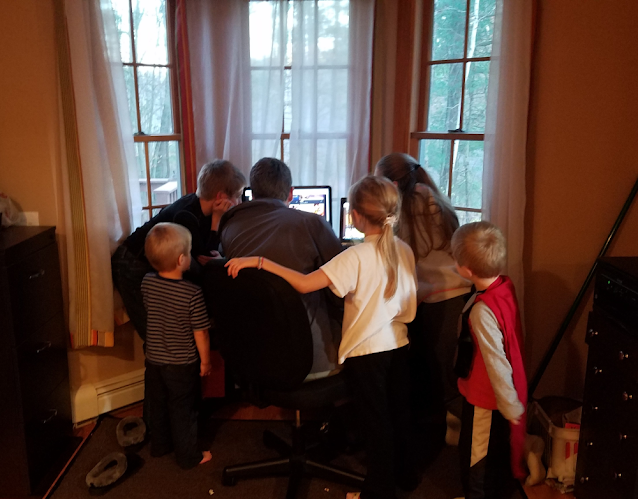
Sadly, this was not a staged photo.

For one week, my family of 8  two adults plus six kids ages 5 to 17 — were going to try doing just that. For our purposes, we identified the following high-dopamine, low-value activities:
  1. Using computers or phones for any non-work or -school activities
  2. Playing video games
  3. Listening to music
  4. Eating sugar and processed food

After the week was up, I gave separate interviews to each member of the family, including myself, to see how it went.

Q: What did you like about the dopamine fast?


Me: Everything. The kids were less crabby. I wasn't constantly policing screen time or reeling the kids back in from watching someone else play Minecraft. When I couldn't pull out my phone during moments of downtime, I was more accessible to the kids. And I loved not having the teens wearing their headphones around the house closed off to the family or scrolling on their phones when I drove them somewhere like I'm the hired help.

Phillip: I was calmer and less stressed. I had more motivation to do things so I wasn't sitting around stressed about not doing things — I just did them. I found enjoyment in activities like reading and thinking. I interacted with the kids more.

17:  I used to listen to music or watch a video when I was bored; when I was forced to do something like reading a book, it took more energy in the short term but actually gave me energy and was more satisfying in the end. It forced me to slow down and think about what would actually make me feel better, so I felt less bad about how I was spending my time. I don't want to use my brain because I'm tired, but I feel better when I use my brain more. 

15: Everything felt more grounded and physical this week.  There were less days where I felt blah. I didn't do more things, but I felt less rushed when I did do things. I knew where all my time was going so that was nice.

13: Nobody was screaming and yelling about screens. We did more stuff together like board games, instead of me being off doing my own thing. I didn't really miss screens, even though my brain was like "I want to go back to screens!"

10: I liked how everybody wasn't grouchy because of screens. When I had screens I wanted to use my time as much as I could with no one bothering me so I would get grumpy and tired and it hurt my eyes, but I still wanted to play it. I also liked the no-screens part because my friend messages me too much, and I got to do more with family.

7: I don't know.

5: I didn't really get distracted [by watching other people playing games when I'm supposed to be doing something else.]

Q: What did you dislike?


Me: Nothing, really.

Phillip: I missed access to information. Sometimes I was curious about something but decided not to look it up. Like right now, I was wondering why trees don't freeze in the winter. Last week I wouldn't have looked it up, but this week I did and it's fascinating, actually.

17: I don't like doing homework with no music. There was also no easy distraction when I wanted to distract myself from negative thoughts I was having. I don't think cutting out sugar made any difference.

15: Sometimes it was inconvenient when I wanted to text something or check the [online] calendar and couldn't. I got bored a lot, like when I finished a test early at school and then just sat there for 50 minutes doing literally nothing. 

13: There were a few times when I was at activities where they had hot chocolate and it was annoying to turn it down.

10: I still want to have some sugar! And since I couldn't message my friend, if I had something to tell her I had to try to remember it until the next day and I didn't like going home and never talking to her again.

7: I kind of didn't have anything to do except read and play outside. I just didn't know what to do, it was kinda boring.

5: I can't have all the foods.

The kids may not have liked the "no sugar" rule, but no one can say they weren't committed. In the cabinet, I found our shaker of cinnamon sugar with a new label reading "POISON."

Q: What surprised you?


Me: I read a whole book this week, which would normally take me 6 months. I used to go on YouTube when I was tired, but I think it only made me more tired. I think it stresses my brain to keep switching between the real world and the virtual world. I was also surprised that I liked not using the car radio all week. Less constant sensory input like background music in the car made me feel more relaxed and slowed down.

Phillip: Nothing. It was basically what I expected.

17: I was expecting to miss certain online activities but I found other things to do with my time. I was also expecting to feel like I did a lot, but I think I ended up just doing things slower.

15: I expected to be more tired but I was actually less tired. I could just go home from work and do stuff, I didn't really need a break [to scroll my phone]. Also, I ended up getting offered a lot of sugar that week [namely a juice/chocolate muffin/donut breakfast, cupcakes, hot chocolate and candy, and two donuts with brownie batter filling] and before I probably would've eaten it all but felt bad about it. 

13: I expected to miss screens but I didn't, really. Which is weird because we've done screen-free weeks before and it was painful. [Mom's note: maybe because we focused on why instead of just me making a rule that seemed arbitrary to the kids.]

10: I thought it wouldn't be very good but it was okay. Kind of boring, though.

7: Nothing surprised me, I didn't even think about it.

5: I thought it would be worse than this but it's not.

Q: What do you want to do differently now that this is over?


Me: I want to confine all my Internet use to daytime hours and be totally present once the kids come home from school. I also want to drastically cut back screen time for all the kids. It has no benefit to them, especially the 5- and 7-year-old who just get crabby when it's time to stop playing. 

Phillip: The main thing I don't want to do is browsing so much. I want to go on the Internet with a specific question or purpose and then get off of it. So less idle browsing and refrain from using screens late in the evening.

17: I want to be more aware of why I'm looking for dopamine. I want to slow down and actually evaluate my options to see if I want to relax with a low-value, high-dopamine activity or do something else. I didn't always make that decision before, I just did it.

15: I kind of liked not have a phone at school because if you have your phone on you, you feel pressured to respond to calls and texts right away. I might not take it with me every day.

13: I used to think 30 minutes [my usual allowed screen time] wasn't much and I thought it was stupid that you guys cared so much, but there are better ways to spend my time so I'll only play maybe only every couple of days. And not too long. After you hit like an hour, you're not really even having fun anymore anyway, you're just doing it 'cause dopamine says so.

10: I want to do less screens, and pick an amount of time I can spend on them.

7: How am I supposed to know? I kinda just do stuff and then the day's over, that's what I do.

5: Go shopping because we need more food. We can get pistachios. [These weren't forbidden, by the way.]

Final Thoughts from Mom (Because Moms Always Get the Last Word)


None of us realized it before, but I think we were all a little addicted to the Internet. This week helped us all check ourselves and set the 'reset' button in that department. 

For us, the sugar part didn't make that much of a difference because we don't normally eat many processed food or sugary treats, but if that's your family's vice it might pan out differently for you.

The older kids were more introspective about our offline week, but I think the younger kids need more help finding meaningful activities to replace screen time. The next time we try this, I'll make sure to engage them in a good project or at least set them up with more playdates.

In the meantime, I'm definitely more likely to distract the younger kids when they ask for screen time (75% it ends in a tantrum, anyway.) Sometimes I say things to the older kids like "I thought you didn't want to play on a screen every day" and they'll more willingly limit their own screen time.

Living without the Internet as much as we could for even a week was nothing but good for the whole family especially for the kids and teens, who genuinely don't know what it's like not to grow up with a bazillion different bluetooth devices in their faces 24 hours a day. Attempting a detox like this is like swimming upstream in our dopamine-saturated world, but it sure does feel good to try sometimes.

Click to Share:
Unremarkable Files
Read More »

Wednesday, January 19, 2022

When You Feel Like Life Has Broken You Down

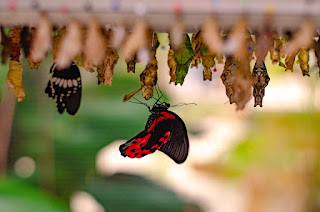
Like most of you, I'd never given much thought to how caterpillars turn into butterflies. I suppose I'd assumed a caterpillar went into its chrysalis, gradually transformed into a butterfly, and came out when it was finished.

But I recently heard a story on NPR about caterpillar metamorphosis and learned I was completely wrong. When you dissect a chrysalis, you don't find a caterpillar in the process of turning into a butterfly. It's just full of... goo. 

Caterpillars don't go into their chrysalis and immediately start sprouting wings. The first thing that happens is that their body breaks down. Their organs dissolve. Tissues die. The expert interviewed on the radio jokingly called it "caterpillar soup." 

It turns out that metamorphosis is less of an evolution and more of a complete demolition and rebuild. And the crazy part is, science doesn't really understand how it all works: we just know that somehow, that mush of cells and structures gets rearranged into a butterfly.

As we're rounding out the second winter of this pandemic that we all surely thought would be over by now, and as we think about the New Year's resolutions we're already failing at (or never felt motivated enough to attempt in the first place), we can all learn a few things from caterpillars.

First lesson: big transformations are messy. We're wired to like small change. Change that's straightforward and linear, where every day we get a little bit better. But there's a limit to how much self-improvement can be made that way.

Can we acquire new habits bit by bit? Sure. Make small tweaks to our behavior? Absolutely. But when we're talking about major overhauls to our character, things get a lot more uncomfortable and uncertain. Big changes are going to involve some dismantling first. We've simply got to make room for the new creature that's going to be rebuilt in our place.

That's easy to say, but hard to remember when you're in the middle of a heartbreaking loss or a devastating crisis. As Christians, we believe that trials exist to refine us! As optimists, we want to say that what doesn't kill us makes us stronger! But the fact is, you can't emerge a butterfly without spending at least some time (and sometimes it's a long time) feeling like caterpillar soup.

Second lesson: we don't know exactly how metamorphosis works. Going from sludge to breathtaking creature isn't the kind of thing there's a manual for. It might seem impossible to us, but fortunately we're not left to our own devices. 

If you're in the "caterpillar soup" stage of your transformation, there's not much anyone can do or say to make things easier right now, but just you wait. Jesus Christ is the One who knows how to eventually rebuild you into a butterfly. You can rely on Him.

I don't know how He does it, but I've seen it in my own life and the lives of people I hope to be like one day. And I know He'll do it for you. Just hang on.


If you're wondering what Jesus can do for your life or how you could connect with Him better, the author invites you to start exploring that question here. Even (and maybe especially) if you feel like caterpillar soup.

Click to Share:
Unremarkable Files
Read More »

Wednesday, December 1, 2021

In Search of a Less Wasteful Christmas

It's December 1st, and if this were any other year I would've had at least one holiday prep-related mental breakdown by now. But it hasn't happened yet, and here's the beautiful reason why: my husband and I aren't getting the kids gifts this year.

Before you start penning your letters to CPS, please hear me out. It's all part of a bigger plan. In fact, it was the kids' idea.

For years now, I've had the sneaking suspicion that our Christmas season was out of control. I tried to simplify and streamline everything I could, using task management apps, jettisoning traditions that were more work than enjoyment, even paring down our holiday decor so it didn't feel like such a big job.

But I couldn't quite bring myself to re-examine our gift-giving. It was Christmas, after all: the one day a year (other than their birthdays) when the kids get presents. And Evans family tradition had it that every kid received four gifts from Mom and Dad on Christmas morning, plus another from Santa.

Maybe that doesn't sound like a lot, but with 6 kids that equals 30+ presents to shop for... not including stocking stuffers. 

I don't want to know how many hours I've spent poring over holiday gift lists and wracking my brain for any conceivable way to commodify my kids' interests: the 7-year-old likes basketball, what product goes with that? A new ball? A jersey? A basketball nightlight for his room? A life-sized cutout of LeBron James? 

Which, to be honest, always left me feeling vaguely uncomfortable. If my son was happily playing basketball with what we had already, wouldn't he rather have me just go outside and play with him instead of hiding inside furtively reading "52 Awesome Gifts for Kids Who Can't Get Enough of the Game"?

Not only that, I was also feeling burnt out. I was tired of the planning, the brainstorming sessions, and the shopping. I was tired of the ordering and the tracking. I had come to resent the color-coded spreadsheet of which items we'd chosen but not ordered, and which ones we'd ordered but hadn't yet arrived. 

And I don't even want to talk about the gift wrapping.

Christmas 2016. I know.

But hey, I figured, that's just the way Christmas is, and resolved that the only thing I could do was change my attitude and try to enjoy the ride.

The gift-giving question was forgotten for a few more years, until this past spring. Inspired by The Minimal Mom on YouTube, I did a massive declutter of the house.

From the attic to the basement, I was ruthless in my purging. I didn't throw out any of the kids' stuff without their knowledge, but what I did do was give them permission to get rid of absolutely anything  anything  they didn't use or love. Even (and maybe especially) if they felt like they "should" keep it for some other reason.

Perhaps not surprisingly, a lot of the stuff we'd given them for Christmas just a few months earlier sailed right out the door that spring, and it was a real eye-opener to me and my husband. All those hours we'd spent hunting down the perfect gifts... maybe it wasn't as worth it as we used to think. 

I don't care for excess and Phillip doesn't like waste, and looking at the pile of items the kids happily discarded once they had permission was hard evidence that we'd inadvertently been creating a lot of both.

So what to do with this wake-up call?

We considered having the kids start drawing up wish lists, but only briefly. I didn't like the idea of reducing gift-giving to an "I put in my order and you fill it" transaction. (Where's the magic in that?) And to be honest, I wasn't sure that shoving a toy catalog in front of my 5-year-old would be any less wasteful than what we'd already been doing. 

We posed the question to the kids at a family meeting, and they came up with a creative solution: experience gifts instead of tangible ones. In the next few weeks, they'll be giving us two or three ideas of something they'd like to do, see, or visit in the week between Christmas and New Years, and Phillip and I will either choose something from the list or surprise them.

But here's the kicker: that will be their only gift from us. Phillip and I are out of the presents-that-go-in-a-box game.

The 5- and 7-year-olds were a little concerned, but were fine once we assured them they'd still get stuff from their grandparents, and Santa will still fill their stockings and bring them one physical present. Our Christmas isn't going to be ascetic, just reasonable.

Ultimately, I realized that no matter how much time and effort we put into selecting the perfect things to put under the tree, we can never guarantee they won't end up in a pile of clutter no one uses. 

Giving experiences, however, is a different story. Even if your experience gift ends up being a dud (you got a flat tire on the way there, the tour guide was crabby, and the whole thing was not at all what you expected,) you still spent time together creating memories. It's always a net positive.

This Christmas will be much different, but in a good way. I know I won't miss waking up exhausted from present-wrapping to hunt down batteries and run tech support for new gadgets, and I don't think the kids will mind having fewer presents under the tree. Instead, we'll have a calendar full of fun things to do together, and none of us can hardly wait.


Click to Share:
Unremarkable Files
Read More »

Tuesday, July 20, 2021

Extreme Decluttering 101: Everything I Learned From Tackling My Messy House

Confession: I've always liked throwing stuff away, and I've always been quick to get rid of stuff that served no purpose. At least I thought I was.

But this spring I discovered a YouTuber called The Minimal Mom and long story short, ended up getting rid of 50% of our belongings. 

During an intense two months of attic-to-basement decluttering, here are some invaluable lessons I learned about figuring out how to live with less.


1. Invest in a "Maybe" Bin


When I first embarked on my decluttering journey, I kept the things I couldn't live without and put everything else in a temporary "maybe" bin. I was really aggressive about putting things in the "maybe" bin because nothing was permanent: if I regretted not having something, I could always take it back out and forget it ever happened.

I planned to keep things in the bin for 6 months as a test run of minimalism, but I was surprised to find that most of the time it only took about 10 minutes. The act of physically separating an item from the collection of "my stuff," then stepping back to look at my decluttered closet/shelf/cupboard and seeing that I still felt good about it, made letting go of things shockingly easy. 

After decluttering the entire house and garage from top to bottom, I think I ultimately took about five things back out of the "maybe" bin.

2. Consider a Tattoo that Says "Do I Use This?"


I'd done my fair share of decluttering before, but now that I was serious about it I approached each item we owned with the question "Do we use this?" instead of "Could we use this?" (It's super-important to note that these are two completely different questions.)

Honestly answering the question "Do we use this?" helped me part with items I've kept for years but could've been stolen by a burglar in the night and I most likely never would've known the difference.

If I got stuck on any item, I'd ask a follow-up question: "Would my life be any different without this?" It helped to acknowledge that getting rid of many things wouldn't negatively impact my life, it would only make the house less cluttered and easier to clean.

3. If You Won't Regret It, Get Rid of It


I encountered plenty of items that passed the "do we use this?" test, but I still got rid of them because they weren't adding very much value to my life. These two questions helped me identify those items:
  • "Will I miss this?" 
  • "What would happen if this item was gone?"


"Will I miss this?" helped me part with clothes I still wore but didn't particularly like. If I had other clothes I liked better, was I ever going to regret getting rid of that cream-colored sweater that shrunk a little in the dryer?

"What would happen if this was gone?" helped when I came across a cache of thermoses in my kitchen. If I didn't have the large size, I'd feel annoyed for less than a second and make do with the medium one, so I decided to donate it. 

Everything is a trade-off, and I decided that for me, the convenience of keeping an item has to justify the inconvenience of having to clean, maintain, organize, and store it.

4. We Become Immune to Our Stuff


Everything in our home multiplies, including furniture, decor on the walls and tabletops, and the contents of every cupboard, closet, and drawer. I think this is because we keep adding stuff, only "seeing" the new pieces and not the ones that were already there. 

Less than two years ago, I bought a storage cabinet because our family's scriptures and church books were scattered all over the house and we desperately needed a place for them. But once I purged the bookshelf we already had, it turned out there was plenty of room for them in there. 

I moved our church stuff into the bookshelf, sold the cabinet we'd apparently never needed, and learned a valuable lesson: don't add anything new to your house until you look around at what's already there. 

5. We Don't Have Time for All the Things... and That's Okay


For me, the kids' stuff was the hardest to declutter. We had a large craft cabinet, game cupboard, activity shelf, and a bunch of toys that rotated in and out of the attic. They were all perfectly good things that the kids played with. 

Well, when they remembered those things were there, anyway.


Eventually, I came to the realization that my kids don't have time to play with every good toy in existence (just like I don't have time to read every good book or visit every exciting place in the world) ...and that's okay. 

Decluttering is, at the heart of it, acknowledging that we have limitations on our time. In the end, I made peace with the fact that the kids will play with whatever we have, and they won't play with whatever we don't have, and either way they'll be just fine. (And, by the way, I didn't get rid of anything without their knowledge.)

6. Get Rid of Duplicate Items


We are a family of eight people who eat virtually every meal at home, so I honestly thought we needed two cheese graters, six spatulas, two sets of measuring cups, and eight mixing bowls... because we used all of them!

But I realized the duplicates were actually part of the problem with my messy kitchen. If something was dirty, we'd just grab the second (or third) duplicate instead of washing it, and so it would go, and by the end of every day the dirty dishes were stacked sky-high.


Once we got rid of the duplicates, we could no longer make that enormous stack if we tried. With fewer dishes, we end up washing the same number of things in a 24-hour period  but now the counter stays clean in between loads. 

I've known for a long time that a perpetually messy kid's room is a sign of having too many toys, but I guess the same principles also applies to kitchens, too.

7. You'll Feel Relieved


Did you know our stuff can make us feel bad? Me, neither. But as I decluttered, some very strange things happened.

For example, I got rid of a dress I love and a wave of relief washed over me. Why? Because years ago, the undershirt that goes with it went missing, and I'd been hanging onto the dress ever since in the hopes of finding a new shirt that could work. It wasn't until I finally decided to donate the dress that I realized I'd been feeling bad every time I saw it hanging in the closet, unable to be worn.

Later that same week, my daughter told me she was glad we pared down the craft supplies. She'd grown into other interests, but the presence of those unused craft supplies made her feel guilty about not using them. Meanwhile, I had no idea she even remembered they were even there.

It's kind of hard to describe the contented feeling of looking around a room and knowing that everything in it is something you use and love, but that's what I love most about decluttering. I'm more likely to fix broken things or deal with paperwork now instead of putting it off, and more motivated to clean up because it doesn't take all day to make a difference. 

And that's really saying something, because I hate cleaning.

Click to Share:
Unremarkable Files
Read More »

Wednesday, March 31, 2021

Alphabetical Advice for Surviving the Teen Years

It's alarming when your child wakes up one morning 6 inches taller, capable of eating his/her own body weight in cereal and speaking a new language composed mainly of monosyllabic grunts. But don't worry, this condition is known as 'adolescence' and is completely temporary. 

You've cruised through many ages and stages before, but this one... well, take these ABCs of parenting teenagers, buckle up, and enjoy the ride. 

As much as you can, anyway, while you're sitting in the passenger seat stomping on an imaginary brake pedal. (An image which is both literal and metaphorical.)


A is for Asking. Giving orders is the adolescent equivalent of waving a red flag at a bull, so instead of saying "Go do your homework" you should play dumb and ask "So what's your plan for finishing your history project?" Even though it's 10:55 PM the night before it's due and there's clearly zero plan.

B is for Be available. But not, like, too available. Provide structure and direction, but also allow your teenager to experience failure at the same time. You won't always know when your teenager needs you to step back and when they need you to step in, but at least you can be reasonably sure you're doing it wrong.

C is for Cry. For goodness' sake, your baby is going to be leaving you in just a few years and IF I EVER AGAIN HEAR THAT SAD SONG FROM TOY STORY 2 IT WILL BE TOO SOON.

D is for Date nights. Say, do you remember that person you made your teenager with? You're about to be spending a lot more time alone together so this is probably a good time to check in and see how they've been doing for the last 10-15 years. 

E is for Eyerolls. Fifteen-year-old me had no idea that every time I rolled my eyes at my mother, she was dislocating her sockets right back at me after I turned around.


F is for Food. Teenagers love food. A great way to build goodwill with your teen is to show up, give them food for no reason, and back away without saying anything. Try to avoid doing anything embarrassing on the way out.

G is for God. You'll need to pray a lot at this time in your life. Trust me.

H is for Humor. If you have to remind/threaten/cajole teens to do something, do it with humor (i.e: "Come quick! It looks like there's been a struggle in the mudroom! Someone broke in and threw your shoes and school stuff all over the place!") If you do it right, they'll clean up while thinking you're a dork instead of a nag.

I is for Insurance premiums going up. If you thought driver's ed was expensive, you had no idea.

J is for Job. Not only is it good for teenagers to learn to earn, save, and manage their own money, it's also good for them to have an adult who isn't you telling them what to do for once. Seriously, let their manager at Burger King teach the life lessons and absorb the eyerolls for a few hours a week. It takes a village.

K is for Knock before entering their room.

L is for Lower your expectations. Your child doesn't have to be running a Fortune 500 company by age 35. In fact, if they're not in jail or still living at home when they're 35, you should be thrilled. It means you did a good job.

M is for Magnitude. Teenagers can be (and often are) delightful, but their problems are of a completely different order of magnitude from when they were little. You'll feel crushing self-doubt you never knew existed, and that's saying something because you were once in a new mom group on Facebook.

From 4BoysMother Melissa Fenton.

N is for Noticing the good stuff. It might not seem like it, but your teen needs positive reinforcement now just as much as they did when they were potty-training. Give lots of compliments, but always make your praise specific and sincere ("Your essay thesis was really insightful" vs. "You're so smart!") Even if you can't think of anything, at least they're not still peeing on the couch.

O is for Opinions. Teenagers love being sought out for their opinion on anything from current events to what shoes you should wear with your outfit. Ask what they think about a topic, any topic. It's even okay to disagree, as long as you're as polite about it as you would be to a friend with different views than you.

P is for Perfection. Don't expect it. Teenagers will fool you into thinking they're almost adults with their giant shoes and driver's licenses and mature stances on foreign policy, but it's a lie. They'll get the entire house sopping wet giving the dog a bath like they were 6 years old.

Q is for Quiet. When your gut reaction is to freak out, err on the side of silence. Toddlers and pets need immediate correction for bad behavior, but teenagers will be okay if a few hours or days go by while you think about how to respond.

R is for Respect. Talk to your teen like an adult you'd meet in polite society, and expect them to do the same for you. That means you can't scream "When are you going to get your #%$^ together?!" and if they criticize you in a mean way you should absolutely say "I don't like to be talked to like that" and leave. It goes both ways.

S is for Screaming into a pillow from time to time. Some things are best left unsaid, or at least muffled behind a closed door.

T is for Try not to take it personally when they come home from school grumpy, ask for help and then get mad at you for trying to help, then come alive for their friends with a million-watt smile. Although it feels pretty personal when someone you love more than life itself is twisting a dagger in your heart, it's weirdly not.


U is for Unconditional love. Don't forget to enjoy spending time with the marvelous person that towers over you but still calls you "Mom." Your teenager is pretty awesome  not because of their accomplishments or talents, but just because they're yours.

V is for Very scary. I once read it's actually a good thing if your teenager tells you scary things. I used to think that only meant confessing terrible misdeeds, but now I know it can mean anything from being honest about things kids their age are doing to confiding in you about a mental health issue you never saw coming. Hard to see that as a positive when what you really want to do is peel yourself out of your skin and run away, but you can try.

W is for Well, it's their life. Repeat that over and over to yourself: Well, it's their life. With a few important exceptions, you shouldn't be more invested in any given aspect of your teenager's life than s/he is.

X is for the Xtremes you'll go through. You can be actually sobbing with pride over some amazing accomplishment of your child, and not even 5 minutes later s/he will do something so dumb you can only shake your head and think, "That kid is never going to make it."

Y is for yelling. Yelling, like name-calling, is a good idea precisely never. (See 'R.')

Z is for Zillions. When the time finally comes for your teen to move out of the house, you'll realize with horror the zillions of things you're not sure you taught them. Do they know how to register to vote? Will they remember not to wash their red clothes with their whites? Have they got enough confidence to stand up for themselves when they need to? You'll panic over all these things and more, but luckily you've had a lot of practice biting your tongue over the last several years. Even if your child didn't have Google for all that, and even if you weren't permanently available on a consulting basis, things would still turn out okay. Hug your grown child tight and relax: you raised a young adult who's capable enough to figure it out. 

Probably.

Click to Share:
Unremarkable Files

Read More »

Wednesday, January 27, 2021

Go Ahead, Ask for Help (I Dare You)

When our washing machine broke down, I wasn't even mad. More like amazed that it lasted as long as it did. Our family goes through a lot of clothes, and after almost 15 years I was starting to suspect it was a Horcrux.

My husband got on YouTube and within an hour he'd disassembled the machine, diagnosed the problem, and ordered the part required to fix it. (My deepest thanks to YouTube University for teaching him how to be an auto mechanic, plumber, electrician, and now appliance repairman.)

With the part ordered but not scheduled to arrive for several days, our minds turned to more immediate concerns.

The washer had died just as we were about to do a critical load of laundry. And I mean critical, as in there were going to be multiple people going commando if we didn't do something ASAP.

Things get worse before they get better.

Groaning, Phillip and I looked up the closest laundromat and started to make arrangements. We both had a full schedule of things we needed and wanted to do today. Who would be least inconvenienced by this 60-minute detour? (Answer: neither of us.)

Then I remembered something I'd seen earlier that morning in the juice aisle of the grocery store.

A woman was trying to reach something on the top shelf, but instead of the popular hop-and-grab method or (my personal favorite) scaling the shelves like Kevin in Home Alone, she simply looked around and said to a tall guy walking by: "Excuse me, could you grab that for me?"

People these days love to say "we're all in this together," but how much more would we really feel that way if we gave and asked for help more freely? What if we didn't let our fear of inconveniencing anyone prevent us from connecting with each other?

Yes, I could drag my laundry to the Bubble 'n Wash and wait there for an hour... or I could call my neighbor and ask if I could throw a quick load of laundry in her machine. 

Was picking up the phone and texting her slightly awkward? A little bit, I'm not going to lie. I really like my neighbor, but we're not exactly wash-my-underwear-at-your-house friends, if you know what I mean.

But building relationships requires stepping outside of your comfort zone, and it's not like I had to tell her exactly what was in my laundry basket (unless she reads this, and then I just did.)

I felt a little sheepish showing up at her doorstep with some dirty clothes and my detergent, but if she minded, it didn't show. She's a lovely person who was probably happy to help, and we had a great conversation while I was there.

I came home glad I didn't go to the laundromat, and not just because this way ended up being much more convenient. Asking for help once in a while, even if we could technically twist ourselves in a knot to avoid it, might even be a good thing. 

And the next time my neighbor needs something or runs out of eggs in the middle of making brownies, she's got my number. 

Click to Share:
Unremarkable Files
Read More »

Wednesday, February 26, 2020

I Tried It: My 90 Minutes in a Sensory Deprivation Tank

In 2015, I wrote a tongue-in-cheek post about how all moms really want for Mother's Day is peace, quiet, and basically a stint in a sensory deprivation tank. Later that year, my dad asked what I wanted for Christmas and on a whim, I think you can guess what I told him.

And because he's always willing to entertain my wacky ideas, an email gift certificate for a place called FLOAT appeared in my inbox on December 25th.

Where it sat for over a year.

Partly because it's hard to schedule 90 minutes (plus drive time) for something like that when you're a mom. But also, if I'm honest, it's because I was terrified.

I loved the idea of a sensory deprivation tank; I just wished it could be more of a sensory deprivation very-large-and-wide-open-space.

The words that came to mind when I first saw this tank were "commercial dryer" followed by "cremation furnace."

When I was little, I remember visiting a cave with an exhibit outside demonstrating the tight spaces a cave explorer might encounter. On display was a small cross-section of a cement tunnel just barely large enough for an adult to squeeze through, which gave me nightmares back then and still gives me the creeps 30 years later.

I don't think of myself as claustrophobic, just someone who's not a fan of being trapped.

When you go to one of these sensory deprivation places, here's what happens: You shower off. You get naked. You lie in what they call a "pod," effortlessly floating on about a foot of water that has hundreds of pounds of salt added to make you ultra-bouyant. There's no sensory feedback: you're wearing earplugs, floating in the water, with the pod door closed to block out all light.

It sounded great, except for parts like the pod door.

Actually, it was only the part about the pod door. In fact, lying awake imagining an "open the pod bay doors, Hal" kind of situation was what had me hyperventilating into my sheets at night.

But last week my dad and stepmom were here to watch the kids, Phillip and I were planning an overnight trip in the vicinity of FLOAT, and it just made sense to finally put on my big girl pants and use my gift certificate.

I was thrilled when I went online to schedule my session and saw there were two styles of tanks: the classic model shaped more or less like a chest freezer, and the "summer sky" model that was roomy enough to stand up in.

Unsurprisingly, the summer sky was booked solid.

Should I just abort the whole mission? Do it another weekend? Wait for the summer sky tank like every other sane person in New England?

No. I could do this. It would be fine.

Probably.

I made the appointment and announced my intentions to the kids, who were simultaneously horrified and amused. I stated explaining the process but my 8-year-old interrupted me: "Wait, you'll be naked?"

"It's a private room," the 15-year-old told her. "No one else will be there when Mom gets in the coffin."

The morning of my session did not start out well. I rolled out of bed half-asleep, planning to cut Phillip's hair before he left for work, and somehow I hurt my neck while reaching for the clippers.

I went back to bed with a heating pad and was lying there bemoaning my fate when the 3-year-old wandered in with a diaper that had leaked poop overnight. The good thing about being paralyzed is that you can't change diapers; the bad thing is that the 3-year-old threw a fit because he wanted me instead of Phillip.

So at 6 AM I was lying there in pain, listening to the 3-year-old screaming his head off over the sound of Phillip dry heaving at the contents of the diaper he was changing.

Good times.

Later that afternoon, I walked into the blue-tiled lobby of FLOAT. It was decorated with abstract pictures of blue swirls on the walls, and on the counter was a display of KIND bars and stack of books for sale called Get High Now (Without Drugs.) Behind the front desk were two nice young ladies with bull nose rings.

"Have you ever floated with us before?" one of them asked.

I thought the answer was pretty obvious, since between the three of us and the one other person in the lobby, I was the only one without a nose ring.

After I traded my shoes for a pair of blue plastic flip-flops, she showed me to a pale blue room about the size of a one-car garage. Silhouettes of bamboo shoots were painted on the walls and a large healing crystal sat on an end table near the door.

She explained the rules, pointed out the earplugs, and opened the tank to show me the inside. I cannot tell you how relieved I was to see the panic button on the inside of the pod door (she called it a "call button" but I know a panic button when I see one.)

Thank goodness someone thought to install a freakout alarm.

The tank actually looked a lot bigger in person than in pictures, and I had no trepidation crawling in and closing the door behind me.

I forgot how salty the water was, until I sat down and my feet popped right up to the surface.

My neck was still stiff from being old hurting it this morning, and I had a hard time finding a comfortable position. I tried letting my arms float at my sides, but in the end what felt best was lacing my fingers behind my head like a country boy in a Mark Twain novel so that's what I did.

Then I waited.

It was quiet, obviously. I could hear my heartbeat.

I was paranoid about getting the saltwater-on-steroids into my eyes, so I had to fight the urge to touch my face or scratch any itches.

Occasionally, my foot or elbow bumped up against the edges of the tank.

Sometimes I got a feeling of swaying back and forth gently, like I was in a hammock. Other times, I got the sensation of slowly beginning to turn head over heels, but not in an unpleasant way. Sometimes my legs felt like they were made out of wood.

After I got into relaxing, I did enjoy it. It was nice swaying (or at least feeling like I was) in the dark to the sound of my heartbeat. But mostly it was... nothing. Neither good, nor bad.
The whiteboard in the lobby of FLOAT.

At some point I vaguely recall twitching a few times, like you do when you start falling asleep, which was really weird because each twitch was followed by a ripple of water. And then I definitely fell asleep, because I remember suddenly coming to and wondering "Did they forget me in here? I feel like I've been in here my whole life."

I got out to check what time it was, and there were only a few minutes left of my session. So I climbed back in the tank but left the door open this time.

I was starting to get bored.

It was almost a relief when the music came on to signal that my time was up: a peaceful, flowing melody that sounded like the soundtrack of a National Geographic documentary on whales.

I got out and took a quick shower with the provided lemongrass body wash and sulfate-free unscented shampoo, at about which time the peaceful music gave way to a loud and aggressive rap. I couldn't understand all the lyrics, but the gist of it was: "Time is money! Get out!"

Phillip wouldn't be there to pick me up for another 30 minutes, so I headed back to the lobby to kill some time. Turning to the lady at the front desk, I asked, "How long have you been working here?"

"About five years."

"Do you do... it... often?" I gestured toward the hallway leading to the tanks, unsure of the appropriate verb to use. So, do you sensory deprivate often?

Apparently, since "sensory deprivation" sounds like a method for extracting secrets from enemies of the state, people who make a living running places like FLOAT don't call it that. They call it 'flotation therapy.' And the correct word for what you do in a sensory deprivation tank  I mean 'pod' — is 'float.'

She answered, "I try to float once a week."

When I asked what she liked about it, she said she's normally an anxious person, so when she gets overwhelmed it helps her to recall "the peace of the tank."

Okay, so I think I get it.

I guess it shouldn't have surprised me that my experience was kind of... nothing, because it literally was nothing. My senses were given no input for 90 minutes.

The value of floating, I'm thinking, is that it strips away your feelings of stress and negativity, bringing you back to neutral. Regularly floating probably helps you learn to get back to that neutral state on your own when you need to.

I'm glad I tried it once, but I think that was enough for me.

If I had 90 minutes of free time, I think I'd rather spend it outside in nature, or soaking in a regular bathtub with music going, or reading my scriptures. You know, something that also has a positive element to uplift and elevate.

But it makes sense.

After Phillip and I returned home, the kids were crowded around the computer watching a YouTube compilation of goats screaming like humans, and just a tiny piece of me wondered if I didn't want to go back for just a few more minutes of quiet after all.

I survived!
I was instantly curious when I heard about flotation therapy. Float therapy (a.k.a. sensory deprivation) involves floating in a saltwater tank known as a ‘pod,’ with no external stimulus like light or sound. It’s supposed to promote mindfulness and relaxation, and help with managing stress and anxiety. Well, I tried it! Here is my review of my 90 minutes in a sensory deprivation tank for the first time. #sensorydeprivation #flotationtherapy #therapy #wellness #stressrelief #review
Click to Share:
Unremarkable Files
Read More »