Showing posts with label parenting. Show all posts

Wednesday, October 5, 2022

30 Things You Learn in 18 Years of Parenting

I've done it. I've sent my first child to college.

That means I've successfully kept alive, fed, and clothed a whole other human for 18 years. This is huge for me, as I can't even handle houseplants.

And just like I've done a few posts musing on the things I've learned after 10 years and 15 years of parenting, this seems like a good milestone year to write another chapter.

If Phillip and I look tired in this picture, it's because we are.

1. Never judge anyone's parenting whose kids are older than yours. You have no idea.

2. People will say you'll have more free time once your kids reach [insert stage of life here]. They're lying.

3. Big kids are every bit as messy as little ones. Actually, they're worse, because you can't even begin nagging them to clean up until after their 3,000 extra-curricular activities.

4. Kids will forget almost all the things you did with them when they were younger, but they'll remember your family traditions with a Norman Rockwell-like nostalgia.

5. Wait as long as you possibly can before giving your kids smartphones.

6. If you don't specifically ask them to take care of the the toilet paper tube on the bathroom counter, they'll just adapt and it becomes a permanent fixture of the house.

This is our overflowing cardboard recycling bin. And it's overflowing because a child flattened a cardboard box, laid it on top of the empty bin, and piled everything else on top of it for a week.

7. It's really humbling when your kids get old enough to realize you're not perfect.

8. Occasionally asking your children to make sacrifices or go without something they want is nothing to feel guilty about. In fact, it's critical to their well-being.

9. Sharing your favorite shows and movies with your kids when they're old enough is magical. 

10. Even the best teenagers are super-frustrating sometimes.

11. The car is a great place to initiate serious talks with your older kids: you don't have to make eye contact, and they can't escape.

12. Eventually, kids will choose their own interests and preferences. They're usually not what you would've chosen for them, and this is surprisingly hard.

One of our children decided her passion was horseback riding; we later discovered she was allergic to horses.

13. When teenagers inconvenience you by throwing things together at the last minute, it isn't because they're inconsiderate. They genuinely don't realize that everyone else in the whole world (except other teenagers) plans ahead.

14. Frankly, it doesn't matter very much what your style of parenting is, as long as it communicates to your kids that you love them.

15. Making a perfectly reasonable request in your calmest and most pleasant demeanor can still be interpreted by your child as "yelling at them."

16a. The saying "little kids, little problems; big kids, big problems" is absolutely true. 

16b. When you're the parent dealing with your big kid's big problems, you desperately need support that you're unable to get because it would breech your teen's privacy. Sorry. 

17. Appreciate the years when your kid goes to bed early and you're off-duty at 8 PM every night.

18. Be home for your big kids as much as possible. Even when they don't depend on you for their minute-to-minute physical survival anymore, they thrive on the stability of your presence. 

19. Kids love few things more than they love leaving every light in the house on.

20. When giving your older child guidance, never end a sentence with a period. Just ask questions until they arrive at the conclusion you hoped they'd reach, and hopefully they'll take their own advice.

21. Teach your kids life skills. For one thing, they actually start being helpful when they're older, and for another, they'll be ready to leave home one day without being overwhelmed by adulting.

Eight years later, this is finally paying off.

22. You will, because of your older kids' large statures and self-assured attitudes, forget that they're still just kids. But don't worry, they'll do something to remind you soon enough.

23. People aren't exaggerating when they say teenage boys smell and will eat everything in sight. If anything, they're understating it.

24. Moodiness is normal, but if you honestly think your teen dislikes you or is chronically disrespectful to your face, your relationship needs help. (Here's a fantastic book about that.)

25. It's really irritating to be the driver for someone who has earbuds shoved in their ears.

26. Older kids refuse to sleep with a flat sheet. No one knows why.

Younger ones will choose to sleep on the floor in between the wall and the perfectly serviceable bed you bought them.

27. Potty training a toddler is a carefree frolic through the meadow compared to teaching a teenager to drive.

28. Everyone starts out thinking they'll be a chill parent, but sooner or later, they'll be threatening to burn down the house if they find one more empty box in the pantry like the rest of us.

29. It doesn't matter what's in the fridge, your kids will look in it and declare that there's "no food." And then they'll leave the door open.

30. Parenting is easier if you don't take yourself too seriously.

The thing that becomes clearest as you raise a child to young adulthood is that actually, you know nothing. Just do the best you can and never stop trying. With any luck, one day you'll have grandchildren to enjoy while your kids go gray trying to figure this stuff out for themselves.

Click to Share:
Unremarkable Files
Read More »

Wednesday, April 20, 2022

Becoming a Part-Time Empty Nester

"So you're a part-time empty nester now!" my friend Bridget joked on my youngest child's first day of kindergarten.

I laughed and told her I was surprised with how uneventful the transition was. When my son climbed on the bus on that first morning, I waved goodbye and skipped back into the house to work on my million mile long to-do list and didn't have any qualms about it. 

Everything seemed strangely fine. I seemed fine.


A few weeks later another friend asked how I was handling having all my babies in school, and when my eyes started leaking in the middle of my answer (weird!) I realized I wasn't as fine as I thought.

It's not that I don't love the morning quiet. Cleaning up the house in the morning and knowing it will stay that way for six hours is nothing short of amazing. And it isn't like my little boy has even left me yet: he still cuddles with me and laughs at my corny jokes after school like he did before. 

But still, I felt a profound loss I couldn't quite name. I finally figured it out weeks later, in line at the grocery store watching an exhausted young mom with a cart full of Gerber puffs playing peek-a-boo with her 9-month-old.

I'd been standing there staring off into space, but not her. She could fill every spare second — in fact, she had to fill every spare second — connecting with the little person who mattered most in the world. 

When you have little ones at your side all the time, you don't have to go looking for moments like that one in line at the grocery store, they find you. They're relentless at finding you. They find you in the middle of the night, they paw at you while you make dinner, they pound on the bathroom door shrieking until you let them in. It's overwhelming, because that's what motherhood is: too much of a good thing.

And for the first time in my career as a mom, I don't have access to those moments 24/7. It was once inconceivable to me that meaningful connection with my kids would require effort and planning. But here we are, squeezing it in between school and their various sports and activities.

When my kids were still little, I thought women who raved about their kids growing older were lying to themselves. They'd say how great it was not to mop up spilled milk at the dinner table and finally decorate the bottom third of the Christmas tree (with breakable ornaments, even!) and I'd think, So what? That's a sad consolation prize.

Now that I'm in their place, doing the same thing, I realize I was only half-right. Given the choice between a solo trip to the bathroom and the unconditional love and affection of a toddler, I'd choose the toddler every time. It's no contest.

But I don't get to make that choice, and it's not a contest anyway. Those older moms were just choosing to find the good in their current stage of life, whatever it was.

If I'm going to thrive in, and maybe even enjoy, my new life as a part-time empty nester, I'm going to need to celebrate the good things about where I am right now.

It doesn't come naturally to me, delighting in a life that isn't filled from sunup to sundown with hugs and kisses from a sticky 3-year-old. The joys, as well as the hard parts, of raising big kids are different.

Moms wrangling toddlers in Target, if I look a little too long or smile a little too hard when you pass by, please forgive me. I remember so fondly the place you're in right now and always will. But now it's time to move from living those days to smiling at photographs of them as the kids and I plan our next adventure together.

Click to Share:
Unremarkable Files
Read More »

Wednesday, February 23, 2022

What We Learned from Our Family Dopamine Detox Experience

I've been hearing a lot about dopamine lately. And the more I heard, the more I became convinced it was time for a family dopamine fast.

In a nutshell, dopamine is the feel-good chemical released in your brain whenever you do something enjoyable. It also plays a role in motivation, making it harder to enjoy or even start low-dopamine activities if you're indulging too much in high-dopamine ones.

While you wouldn't want to eliminate all dopamine (when scientists block the dopamine in mice's brains, the mice starve because they lack the motivation to eat), I decided it was time for a little experiment of our own: what would happen if we cut out things that added a lot of dopamine but little overall value to our lives?

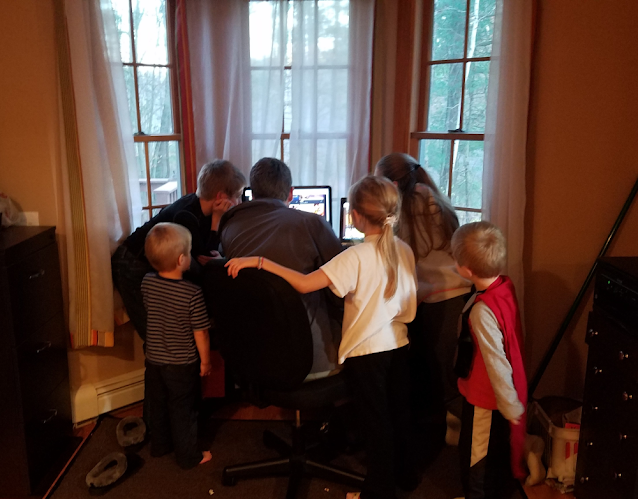
Sadly, this was not a staged photo.

For one week, my family of 8 — two adults plus six kids ages 5 to 17 — were going to try doing just that. For our purposes, we identified the following high-dopamine, low-value activities:
  1. Using computers or phones for any non-work or -school activities
  2. Playing video games
  3. Listening to music
  4. Eating sugar and processed food

After the week was up, I gave separate interviews to each member of the family, including myself, to see how it went.

Q: What did you like about the dopamine fast?


Me: Everything. The kids were less crabby. I wasn't constantly policing screen time or reeling the kids back in from watching someone else play Minecraft. When I couldn't pull out my phone during moments of downtime, I was more accessible to the kids. And I loved not having the teens wearing their headphones around the house closed off to the family or scrolling on their phones when I drove them somewhere like I'm the hired help.

Phillip: I was calmer and less stressed. I had more motivation to do things so I wasn't sitting around stressed about not doing things — I just did them. I found enjoyment in activities like reading and thinking. I interacted with the kids more.

17:  I used to listen to music or watch a video when I was bored; when I was forced to do something like reading a book, it took more energy in the short term but actually gave me energy and was more satisfying in the end. It forced me to slow down and think about what would actually make me feel better, so I felt less bad about how I was spending my time. I don't want to use my brain because I'm tired, but I feel better when I use my brain more. 

15: Everything felt more grounded and physical this week.  There were less days where I felt blah. I didn't do more things, but I felt less rushed when I did do things. I knew where all my time was going so that was nice.

13: Nobody was screaming and yelling about screens. We did more stuff together like board games, instead of me being off doing my own thing. I didn't really miss screens, even though my brain was like "I want to go back to screens!"

10: I liked how everybody wasn't grouchy because of screens. When I had screens I wanted to use my time as much as I could with no one bothering me so I would get grumpy and tired and it hurt my eyes, but I still wanted to play it. I also liked the no-screens part because my friend messages me too much, and I got to do more with family.

7: I don't know.

5: I didn't really get distracted [by watching other people playing games when I'm supposed to be doing something else.]

Q: What did you dislike?


Me: Nothing, really.

Phillip: I missed access to information. Sometimes I was curious about something but decided not to look it up. Like right now, I was wondering why trees don't freeze in the winter. Last week I wouldn't have looked it up, but this week I did and it's fascinating, actually.

17: I don't like doing homework with no music. There was also no easy distraction when I wanted to distract myself from negative thoughts I was having. I don't think cutting out sugar made any difference.

15: Sometimes it was inconvenient when I wanted to text something or check the [online] calendar and couldn't. I got bored a lot, like when I finished a test early at school and then just sat there for 50 minutes doing literally nothing. 

13: There were a few times when I was at activities where they had hot chocolate and it was annoying to turn it down.

10: I still want to have some sugar! And since I couldn't message my friend, if I had something to tell her I had to try to remember it until the next day and I didn't like going home and never talking to her again.

7: I kind of didn't have anything to do except read and play outside. I just didn't know what to do, it was kinda boring.

5: I can't have all the foods.

The kids may not have liked the "no sugar" rule, but no one can say they weren't committed. In the cabinet, I found our shaker of cinnamon sugar with a new label reading "POISON."

Q: What surprised you?


Me: I read a whole book this week, which would normally take me 6 months. I used to go on YouTube when I was tired, but I think it only made me more tired. I think it stresses my brain to keep switching between the real world and the virtual world. I was also surprised that I liked not using the car radio all week. Less constant sensory input like background music in the car made me feel more relaxed and slowed down.

Phillip: Nothing. It was basically what I expected.

17: I was expecting to miss certain online activities but I found other things to do with my time. I was also expecting to feel like I did a lot, but I think I ended up just doing things slower.

15: I expected to be more tired but I was actually less tired. I could just go home from work and do stuff, I didn't really need a break [to scroll my phone]. Also, I ended up getting offered a lot of sugar that week [namely a juice/chocolate muffin/donut breakfast, cupcakes, hot chocolate and candy, and two donuts with brownie batter filling] and before I probably would've eaten it all but felt bad about it. 

13: I expected to miss screens but I didn't, really. Which is weird because we've done screen-free weeks before and it was painful. [Mom's note: maybe because we focused on why instead of just me making a rule that seemed arbitrary to the kids.]

10: I thought it wouldn't be very good but it was okay. Kind of boring, though.

7: Nothing surprised me, I didn't even think about it.

5: I thought it would be worse than this but it's not.

Q: What do you want to do differently now that this is over?


Me: I want to confine all my Internet use to daytime hours and be totally present once the kids come home from school. I also want to drastically cut back screen time for all the kids. It has no benefit to them, especially the 5- and 7-year-old who just get crabby when it's time to stop playing. 

Phillip: The main thing I don't want to do is browsing so much. I want to go on the Internet with a specific question or purpose and then get off of it. So less idle browsing and refrain from using screens late in the evening.

17: I want to be more aware of why I'm looking for dopamine. I want to slow down and actually evaluate my options to see if I want to relax with a low-value, high-dopamine activity or do something else. I didn't always make that decision before, I just did it.

15: I kind of liked not have a phone at school because if you have your phone on you, you feel pressured to respond to calls and texts right away. I might not take it with me every day.

13: I used to think 30 minutes [my usual allowed screen time] wasn't much and I thought it was stupid that you guys cared so much, but there are better ways to spend my time so I'll only play maybe only every couple of days. And not too long. After you hit like an hour, you're not really even having fun anymore anyway, you're just doing it 'cause dopamine says so.

10: I want to do less screens, and pick an amount of time I can spend on them.

7: How am I supposed to know? I kinda just do stuff and then the day's over, that's what I do.

5: Go shopping because we need more food. We can get pistachios. [These weren't forbidden, by the way.]

Final Thoughts from Mom (Because Moms Always Get the Last Word)


None of us realized it before, but I think we were all a little addicted to the Internet. This week helped us all check ourselves and set the 'reset' button in that department. 

For us, the sugar part didn't make that much of a difference because we don't normally eat many processed food or sugary treats, but if that's your family's vice it might pan out differently for you.

The older kids were more introspective about our offline week, but I think the younger kids need more help finding meaningful activities to replace screen time. The next time we try this, I'll make sure to engage them in a good project or at least set them up with more playdates.

In the meantime, I'm definitely more likely to distract the younger kids when they ask for screen time (75% it ends in a tantrum, anyway.) Sometimes I say things to the older kids like "I thought you didn't want to play on a screen every day" and they'll more willingly limit their own screen time.

Living without the Internet as much as we could for even a week was nothing but good for the whole family — especially for the kids and teens, who genuinely don't know what it's like not to grow up with a bazillion different bluetooth devices in their faces 24 hours a day. Attempting a detox like this is like swimming upstream in our dopamine-saturated world, but it sure does feel good to try sometimes.

Click to Share:
Unremarkable Files
Read More »

Wednesday, December 1, 2021

In Search of a Less Wasteful Christmas

It's December 1st, and if this were any other year I would've had at least one holiday prep-related mental breakdown by now. But it hasn't happened yet, and here's the beautiful reason why: my husband and I aren't getting the kids gifts this year.

Before you start penning your letters to CPS, please hear me out. It's all part of a bigger plan. In fact, it was the kids' idea.

For years now, I've had the sneaking suspicion that our Christmas season was out of control. I tried to simplify and streamline everything I could, using task management apps, jettisoning traditions that were more work than enjoyment, even paring down our holiday decor so it didn't feel like such a big job.

But I couldn't quite bring myself to re-examine our gift-giving. It was Christmas, after all: the one day a year (other than their birthdays) when the kids get presents. And Evans family tradition had it that every kid received four gifts from Mom and Dad on Christmas morning, plus another from Santa.

Maybe that doesn't sound like a lot, but with 6 kids that equals 30+ presents to shop for... not including stocking stuffers. 

I don't want to know how many hours I've spent poring over holiday gift lists and wracking my brain for any conceivable way to commodify my kids' interests: the 7-year-old likes basketball, what product goes with that? A new ball? A jersey? A basketball nightlight for his room? A life-sized cutout of LeBron James? 

Which, to be honest, always left me feeling vaguely uncomfortable. If my son was happily playing basketball with what we had already, wouldn't he rather have me just go outside and play with him instead of hiding inside furtively reading "52 Awesome Gifts for Kids Who Can't Get Enough of the Game"?

Not only that, I was also feeling burnt out. I was tired of the planning, the brainstorming sessions, and the shopping. I was tired of the ordering and the tracking. I had come to resent the color-coded spreadsheet of which items we'd chosen but not ordered, and which ones we'd ordered but hadn't yet arrived. 

And I don't even want to talk about the gift wrapping.

Christmas 2016. I know.

But hey, I figured, that's just the way Christmas is, and resolved that the only thing I could do was change my attitude and try to enjoy the ride.

The gift-giving question was forgotten for a few more years, until this past spring. Inspired by The Minimal Mom on YouTube, I did a massive declutter of the house.

From the attic to the basement, I was ruthless in my purging. I didn't throw out any of the kids' stuff without their knowledge, but what I did do was give them permission to get rid of absolutely anything — anything — they didn't use or love. Even (and maybe especially) if they felt like they "should" keep it for some other reason.

Perhaps not surprisingly, a lot of the stuff we'd given them for Christmas just a few months earlier sailed right out the door that spring, and it was a real eye-opener to me and my husband. All those hours we'd spent hunting down the perfect gifts... maybe it wasn't as worth it as we used to think. 

I don't care for excess and Phillip doesn't like waste, and looking at the pile of items the kids happily discarded once they had permission was hard evidence that we'd inadvertently been creating a lot of both.

So what to do with this wake-up call?

We considered having the kids start drawing up wish lists, but only briefly. I didn't like the idea of reducing gift-giving to an "I put in my order and you fill it" transaction. (Where's the magic in that?) And to be honest, I wasn't sure that shoving a toy catalog in front of my 5-year-old would be any less wasteful than what we'd already been doing. 

We posed the question to the kids at a family meeting, and they came up with a creative solution: experience gifts instead of tangible ones. In the next few weeks, they'll be giving us two or three ideas of something they'd like to do, see, or visit in the week between Christmas and New Years, and Phillip and I will either choose something from the list or surprise them.

But here's the kicker: that will be their only gift from us. Phillip and I are out of the presents-that-go-in-a-box game.

The 5- and 7-year-olds were a little concerned, but were fine once we assured them they'd still get stuff from their grandparents, and Santa will still fill their stockings and bring them one physical present. Our Christmas isn't going to be ascetic, just reasonable.

Ultimately, I realized that no matter how much time and effort we put into selecting the perfect things to put under the tree, we can never guarantee they won't end up in a pile of clutter no one uses. 

Giving experiences, however, is a different story. Even if your experience gift ends up being a dud (you got a flat tire on the way there, the tour guide was crabby, and the whole thing was not at all what you expected,) you still spent time together creating memories. It's always a net positive.

This Christmas will be much different, but in a good way. I know I won't miss waking up exhausted from present-wrapping to hunt down batteries and run tech support for new gadgets, and I don't think the kids will mind having fewer presents under the tree. Instead, we'll have a calendar full of fun things to do together, and none of us can hardly wait.


Click to Share:
Unremarkable Files
Read More »

Tuesday, September 21, 2021

5 Sneaky Parenting Hacks to Get Your Kids to Obey (No Yelling!)

This post contains affiliate links, which means I may receive a referral commission if you buy something using a link you find here.

In the last 17 years of wiping butts and vacuuming up Legos, I've come across a lot of parenting hacks. Some were better than others, and some were so downright brilliant I'm upset I didn't discover them earlier! 

Your mileage may vary depending on the ages and personalities of your kids, but allow me to share with you some of my absolute favorites.

Even good kids don't listen sometimes. Instead of yelling or disciplining, try these 5 easy parenting hacks that naturally make kids want to obey. (We don't know why they work, but they do!) #kids #parentingtips #parentingadvice #momhacks

I've been using these for years, but it has to be said: these "hacks" are like Band-Aids. They're quick fixes for generally good listeners, but not exactly long-term solutions for kids who never listen. 

(If you're ready to tear your hair out because your kids ignore every word you say, I suggest trying the strategies in this book instead.) 

Countdown: T-Minus 10 Seconds


This sounds like counting to three but it totally isn't. Instead of counting to a certain number and then the kids get in trouble, you're telling them how many seconds until a specified activity is going to occur. Think of it like the countdown to a shuttle launch.

What you're going to do is use your most dramatic voice to announce "It's time for lunch in 10... 9... 8... 7... 6... 5... 4... 3... 2... 1! Good job getting to the table, guys. Let's eat!" My goal is to sound super-excited about it, so the kids' competitive drive kicks in and they try to make it to the table before I hit zero (or at least don't miss the beginning of dinner.)

Slowly List Who's Obeying


Before bedtime our family gets together for kneeling prayer, and sometimes the kids are a little rowdy. (And by that, I mean they won't stop whacking each other with light sabers and doing quadruple gainers off the couch.) So I will look around and, in a positive voice, name the people I see who are quiet and ready for the prayer. 

And if none of the kids are? I'll literally say, "Who's ready for prayer? Let's see, Mommy's ready... Daddy's ready..." and they'll often fall right in line like they can't wait to get named, too. There's just something about that dopamine hit of praise and you should absolutely leverage it. (Note: I don't call out anyone for misbehaving, I just name everyone who is behaving.)

10-Minute Deep Fake


In many ways, giving your kids a choice is dumb parenting advice. When asked "Do you want to clean up your cars or your blocks first?" ten out of ten kids will say "Neither!" and keep playing. But there's a better way that actually does work.

About 10 minutes before you want your kids to do something unpleasant, ask them: "Do you want to clean up your toys now or in ten minutes?" It'll shock precisely no one when they answer "Ten minutes," but in the end they'll feel like they scored extra playtime and you'll get exactly what you wanted. 

If they still complain, a reminder that they already got 10 extra minutes (and might not next time if they don't cooperate) is usually enough to make them roll their eyes and go do it.

Tack Your Request onto a "Yes"


Make a mental note of a quick chore or something you'd like your kids to do in the back of your mind, and then save it for the right moment. Wait until they ask "Can I/we ____________?" you can cheerfully answer, "Yes, right after you put away your shoes and backpack!"

For some reason, saying "Absolutely, let's just do [insert annoying thing you don't like doing] first!" is much more well-received than me following them around asking them to pick up after themselves. (To read about a few quick clean-up games I've been known to use on occasion in our house, click here.)

Put It On a List


What things do you find yourself asking your kids to do every day? Put it on a list, and make something they really like to do (in our house, it's screen time) conditional on completion of the list. It may take some adjustment, but trust me: you'll love outsourcing some of your Nag Machine duties.

Each of our four youngest kids have lists in a page protector on the wall, with things like doing your homework, packing tomorrow's lunch, playing outside, and practicing piano. They cross off items with a whiteboard marker as they go and wipe it off to do it again the next day.

And if all else fails, you could always try the hack I discovered my 15-year-old has been using when Phillip and I are out of the house: turn the computer volume up and blast Minecraft music. The kids drop everything and come running, and she never even has to raise her voice.

I'm raising a smarter version of myself, people.

Click to Share:
Unremarkable Files
Read More »

Tuesday, July 20, 2021

Extreme Decluttering 101: Everything I Learned From Tackling My Messy House

Confession: I've always liked throwing stuff away, and I've always been quick to get rid of stuff that served no purpose. At least I thought I was.

But this spring I discovered a YouTuber called The Minimal Mom and long story short, ended up getting rid of 50% of our belongings. 

During an intense two months of attic-to-basement decluttering, here are some invaluable lessons I learned about figuring out how to live with less.


1. Invest in a "Maybe" Bin


When I first embarked on my decluttering journey, I kept the things I couldn't live without and put everything else in a temporary "maybe" bin. I was really aggressive about putting things in the "maybe" bin because nothing was permanent: if I regretted not having something, I could always take it back out and forget it ever happened.

I planned to keep things in the bin for 6 months as a test run of minimalism, but I was surprised to find that most of the time it only took about 10 minutes. The act of physically separating an item from the collection of "my stuff," then stepping back to look at my decluttered closet/shelf/cupboard and seeing that I still felt good about it, made letting go of things shockingly easy. 

After decluttering the entire house and garage from top to bottom, I think I ultimately took about five things back out of the "maybe" bin.

2. Consider a Tattoo that Says "Do I Use This?"


I'd done my fair share of decluttering before, but now that I was serious about it I approached each item we owned with the question "Do we use this?" instead of "Could we use this?" (It's super-important to note that these are two completely different questions.)

Honestly answering the question "Do we use this?" helped me part with items I've kept for years but could've been stolen by a burglar in the night and I most likely never would've known the difference.

If I got stuck on any item, I'd ask a follow-up question: "Would my life be any different without this?" It helped to acknowledge that getting rid of many things wouldn't negatively impact my life, it would only make the house less cluttered and easier to clean.

3. If You Won't Regret It, Get Rid of It


I encountered plenty of items that passed the "do we use this?" test, but I still got rid of them because they weren't adding very much value to my life. These two questions helped me identify those items:
  • "Will I miss this?" 
  • "What would happen if this item was gone?"


"Will I miss this?" helped me part with clothes I still wore but didn't particularly like. If I had other clothes I liked better, was I ever going to regret getting rid of that cream-colored sweater that shrunk a little in the dryer?

"What would happen if this was gone?" helped when I came across a cache of thermoses in my kitchen. If I didn't have the large size, I'd feel annoyed for less than a second and make do with the medium one, so I decided to donate it. 

Everything is a trade-off, and I decided that for me, the convenience of keeping an item has to justify the inconvenience of having to clean, maintain, organize, and store it.

4. We Become Immune to Our Stuff


Everything in our home multiplies, including furniture, decor on the walls and tabletops, and the contents of every cupboard, closet, and drawer. I think this is because we keep adding stuff, only "seeing" the new pieces and not the ones that were already there. 

Less than two years ago, I bought a storage cabinet because our family's scriptures and church books were scattered all over the house and we desperately needed a place for them. But once I purged the bookshelf we already had, it turned out there was plenty of room for them in there. 

I moved our church stuff into the bookshelf, sold the cabinet we'd apparently never needed, and learned a valuable lesson: don't add anything new to your house until you look around at what's already there. 

5. We Don't Have Time for All the Things... and That's Okay


For me, the kids' stuff was the hardest to declutter. We had a large craft cabinet, game cupboard, activity shelf, and a bunch of toys that rotated in and out of the attic. They were all perfectly good things that the kids played with. 

Well, when they remembered those things were there, anyway.


Eventually, I came to the realization that my kids don't have time to play with every good toy in existence (just like I don't have time to read every good book or visit every exciting place in the world) ...and that's okay. 

Decluttering is, at the heart of it, acknowledging that we have limitations on our time. In the end, I made peace with the fact that the kids will play with whatever we have, and they won't play with whatever we don't have, and either way they'll be just fine. (And, by the way, I didn't get rid of anything without their knowledge.)

6. Get Rid of Duplicate Items


We are a family of eight people who eat virtually every meal at home, so I honestly thought we needed two cheese graters, six spatulas, two sets of measuring cups, and eight mixing bowls... because we used all of them!

But I realized the duplicates were actually part of the problem with my messy kitchen. If something was dirty, we'd just grab the second (or third) duplicate instead of washing it, and so it would go, and by the end of every day the dirty dishes were stacked sky-high.


Once we got rid of the duplicates, we could no longer make that enormous stack if we tried. With fewer dishes, we end up washing the same number of things in a 24-hour period — but now the counter stays clean in between loads. 

I've known for a long time that a perpetually messy kid's room is a sign of having too many toys, but I guess the same principles also applies to kitchens, too.

7. You'll Feel Relieved


Did you know our stuff can make us feel bad? Me, neither. But as I decluttered, some very strange things happened.

For example, I got rid of a dress I love and a wave of relief washed over me. Why? Because years ago, the undershirt that goes with it went missing, and I'd been hanging onto the dress ever since in the hopes of finding a new shirt that could work. It wasn't until I finally decided to donate the dress that I realized I'd been feeling bad every time I saw it hanging in the closet, unable to be worn.

Later that same week, my daughter told me she was glad we pared down the craft supplies. She'd grown into other interests, but the presence of those unused craft supplies made her feel guilty about not using them. Meanwhile, I had no idea she even remembered they were even there.

It's kind of hard to describe the contented feeling of looking around a room and knowing that everything in it is something you use and love, but that's what I love most about decluttering. I'm more likely to fix broken things or deal with paperwork now instead of putting it off, and more motivated to clean up because it doesn't take all day to make a difference. 

And that's really saying something, because I hate cleaning.

Click to Share:
Unremarkable Files
Read More »

Wednesday, March 31, 2021

Alphabetical Advice for Surviving the Teen Years

It's alarming when your child wakes up one morning 6 inches taller, capable of eating his/her own body weight in cereal and speaking a new language composed mainly of monosyllabic grunts. But don't worry, this condition is known as 'adolescence' and is completely temporary. 

You've cruised through many ages and stages before, but this one... well, take these ABCs of parenting teenagers, buckle up, and enjoy the ride. 

As much as you can, anyway, while you're sitting in the passenger seat stomping on an imaginary brake pedal. (An image which is both literal and metaphorical.)


A is for Asking. Giving orders is the adolescent equivalent of waving a red flag at a bull, so instead of saying "Go do your homework" you should play dumb and ask "So what's your plan for finishing your history project?" Even though it's 10:55 PM the night before it's due and there's clearly zero plan.

B is for Be available. But not, like, too available. Provide structure and direction, but also allow your teenager to experience failure at the same time. You won't always know when your teenager needs you to step back and when they need you to step in, but at least you can be reasonably sure you're doing it wrong.

C is for Cry. For goodness' sake, your baby is going to be leaving you in just a few years and IF I EVER AGAIN HEAR THAT SAD SONG FROM TOY STORY 2 IT WILL BE TOO SOON.

D is for Date nights. Say, do you remember that person you made your teenager with? You're about to be spending a lot more time alone together so this is probably a good time to check in and see how they've been doing for the last 10-15 years. 

E is for Eyerolls. Fifteen-year-old me had no idea that every time I rolled my eyes at my mother, she was dislocating her sockets right back at me after I turned around.


F is for Food. Teenagers love food. A great way to build goodwill with your teen is to show up, give them food for no reason, and back away without saying anything. Try to avoid doing anything embarrassing on the way out.

G is for God. You'll need to pray a lot at this time in your life. Trust me.

H is for Humor. If you have to remind/threaten/cajole teens to do something, do it with humor (i.e: "Come quick! It looks like there's been a struggle in the mudroom! Someone broke in and threw your shoes and school stuff all over the place!") If you play your cards right, they'll clean up while thinking you're a dork instead of a nag.

I is for Insurance premiums going up. If you thought diapers were expensive, you had no idea.

J is for Job. Not only is it good for teenagers to learn to earn, save, and manage their own money, it's also good for them to have an adult who isn't you telling them what to do for once. Seriously, let their manager at Burger King teach the life lessons and absorb the eyerolls for a few hours a week. It takes a village.

K is for Knock before entering their room.

L is for Lower your expectations. Your child doesn't have to be running a Fortune 500 company by age 35. In fact, if they're not in jail or still living at home when they're 35, you should be thrilled. It means you did a good job.

M is for Magnitude. Teenagers can be (and often are) delightful, but their problems are of a completely different order of magnitude from when they were little. You'll feel crushing self-doubt you never knew existed, and that's saying something because you were once in a new mom group on Facebook.

From 4BoysMother Melissa Fenton.

N is for Noticing the good stuff. It might not seem like it, but your teen needs positive reinforcement now just as much as they did when they were potty-training. Give lots of compliments, but always make your praise specific and sincere ("Your essay thesis was really insightful" vs. "You're so smart!") Even if you can't think of anything, at least they're not still peeing on the couch.

O is for Opinions. Teenagers love being sought out for their opinion on anything from current events to what shoes you should wear with your outfit. Ask what they think about a topic, any topic. It's even okay to disagree, as long as you're as polite about it as you would be to a friend with different views than you.

P is for Perfection. Don't expect it. Teenagers will fool you into thinking they're almost adults with their giant shoes and driver's licenses and mature stances on foreign policy, but it's a lie. They'll get the entire house sopping wet giving the dog a bath like they were 6 years old.

Q is for Quiet. When your gut reaction is to freak out, err on the side of silence. Toddlers and pets need immediate correction for bad behavior, but teenagers will be okay if a few hours or days go by while you think about how to respond.

R is for Respect. Talk to your teen like an adult you'd meet in polite society, and expect them to do the same for you. That means you can't scream "When are you going to get your #%$^ together?!" and if they criticize you in a mean way you should absolutely say "I don't like to be talked to like that" and leave. It goes both ways.

S is for Screaming into a pillow from time to time. Some things are best left unsaid, or at least muffled behind a closed door.

T is for Try not to take it personally when they come home from school grumpy, ask for help and then get mad at you for trying to help, then come alive for their friends with a million-watt smile. Although it feels pretty personal when someone you love more than life itself is twisting a dagger in your heart, it's weirdly not.


U is for Unconditional love. Don't forget to enjoy spending time with the marvelous person that towers over you but still calls you "Mom." Your teenager is pretty awesome — not because of their accomplishments or talents, but just because they're yours.

V is for Very scary. I once read it's actually a good thing if your teenager tells you scary things. I used to think that only meant confessing terrible misdeeds, but now I know it can mean anything from being honest about things kids their age are doing to confiding in you about a mental health issue you never saw coming. Hard to see that as a positive when what you really want to do is peel yourself out of your skin and run away, but you can try.

W is for Well, it's their life. Repeat that over and over to yourself: Well, it's their life. With a few important exceptions, you shouldn't be more invested in any given aspect of your teenager's life than s/he is.

X is for the Xtremes you'll go through. You can be actually sobbing with pride over some amazing accomplishment of your child, and not even 5 minutes later s/he will do something so dumb you can only shake your head and think, "That kid is never going to make it."

Y is for yelling. Yelling, like name-calling, is a good idea precisely never. (See 'R.')

Z is for Zillions. When the time finally comes for your teen to move out of the house, you'll realize with horror the zillions of things you're not sure you taught them. Do they know how to register to vote? Will they remember not to wash their red clothes with their whites? Have they got enough confidence to stand up for themselves when they need to? You'll panic over all these things and more, but luckily you've had a lot of practice biting your tongue over the last several years. Even if your child didn't have Google for all that, and even if you weren't permanently available on a consulting basis, things would still turn out okay. Hug your grown child tight and relax: you raised a young adult who's capable enough to figure it out. 

Probably.

Click to Share:
Unremarkable Files

Read More »

Wednesday, February 10, 2021

A Gallery Exhibition of Artwork by My Children

Welcome to FOUND ART! 

Found Art is a virtual exhibition highlighting work from six accomplished artists, ages 2 through 14, who I happen to have birthed and raised. 

The pieces in this collection employ a variety of materials and styles, but they are all what French-American sculptor and painter Marcel Duchamp called "found art." 

Found art challenges assumptions of what constitutes fine art, and the six artists featured in this exhibition love to do nothing more than challenge. 

As the head curator of this collection, I sincerely hope you enjoy viewing their work.
 

Wall Motif #1 

Wax crayon on drywall

Free-flowing circular lines evoke a feeling of urgency in this monochromatic work. The shades of green represent the regenerative power of art, while the concentric circles hint at the artist's relentless drive to create wherever and whenever the muse strikes.


Upon the Minivan Floor: A Meditation 

Mixed media

Half archaeological dig, half treatise on the chaos of domestic life, Meditation features a long line of child-centric debris that eventually disappears from view into the No Man's Land that is the minivan's third row of seats. Note the artist's deliberate use of multiples — jackets, water bottles, baby dolls — to highlight the excesses of modern childhood.


Across a Driveway 

Plastic on asphalt

The glee evoked by the vibrant reds and cool blues of the ride-on toys in this colorful panorama is offset by the unnatural stillness of the scene. A dramatic shadow hovers over half of the abandoned toys, symbolizing the yin and yang of existence and calling into question exactly who is going to drag them all back into the garage before it rains. 


Digital Art 2.0

Graphite on computer monitor

People have been creating computer generated art for decades, but what if you just drew directly on the monitor instead? This piece is a conversation about reimagining digital art as we know it — and as suggested by the visual imbalance of negative space in the top left corner, the dialogue remains unfinished.


Sunday Morning Breakfast 

2% milk on wood veneer table, upholstery, and hardwood

The artist has obviously served himself breakfast without assistance, as indicated by the Rorschach-like patterns created by the blobs of pasteurized milk dripping from the table and chair in the foreground. Thoughtful and enigmatic, this psychological work reminds viewers with children why they should never, ever sit down without looking first.


Discarded Clothing 

Poly-cotton blend, faux leather on floor

Liminal space represents an area of physical or metaphorical transition from one place to another. With iconic efficiency, the artist recreates the essence of liminal space by leaving 100% of her dirty clothing on the floor in a way that almost resembles a living body. One practically expects it to get up and walk to the dirty hamper of its own accord... but it never does.


Afternoon Snack 

Stick of butter in wax paper

It remains somewhat ambiguous whether the artist has (1) inexplicably started buttering toast from the middle of the stick, or (2) simply grabbed it with both hands and started devouring it like a salted ear of corn on the cob. Either way, undertones of anarchy are woven into this gritty visual narrative that breaks down some of our most basic social norms.


Home From School 

Backpacks, shoes, and coats in mudroom

This vignette of after-school pandemonium shows bookbags and outerwear flung haphazardly throughout the communal space nearest to the door. Upon closer examination, we can discern that each object was dropped precisely where the artist removed it from his/her person; absolutely no attempt was made to put anything away in its designated place.


A Kitchen Helper

Unbleached all-purpose flour on everything

With humor and whimsy, this piece analyzes the true cost of baking with children. Its composition leads the viewer's gaze from the broad flour strokes on the counter to the abstract splatter on the trash can, then down to the spectral handprints which suggest that our artist is at this very moment running through the house covered in flour.


The Changing of the Roll  

Charmin with repurposed toilet paper roll holder

Part of a recurring installation in our bathroom, this work pushes the boundaries between innovative genius and lazy slob. What really qualifies as changing the toilet paper, anyway? The nonsensical scene is reminiscent of surrealism, a 20th century artistic movement featuring the irrational juxtaposition of images such as this stupid toilet paper shelf we seem to have now.


A Bookshelf 

Bound paper (hardback and paperback)

In this bird's eye depiction of toddler life, the focal point is the empty second shelf that has been unburdened of all its books. After removing each volume at eye level and thrusting it aggressively to the floor, the artist has arranged it in the format of a seemingly random collage. 


Reflections 

Broken glass on tile

Reflections is an allegorical piece that discusses the existence of transcendental beauty in a broken world. Using reflected light and fragmented lines as a commentary on love and loss, this evocative work is the reason I still wear shoes whenever I walk around in this room.


Empty Cream Cheese Wrapper 

Tin foil in refrigerator

With photographic realism, this piece captures the rage-inducing moment yet another empty container is discovered in the refrigerator. It's simultaneously infuriating and perplexing: why would the artist bother walking across the kitchen to return the foil to the refrigerator instead of throwing it away? WHY?

—   —   —   —

For more information on the exhibition, its curator, or its contributing artists, please visit www.UnremarkableFiles.com or follow Unremarkable Files on Facebook, Instagram, Twitter, or Pinterest.

Click to Share:
Unremarkable Files
Read More »